
Stained Glass of Percy Bacon & Brothers
- Home
- Life
- UK County List
- Bedfordshire
- Berkshire
- Bristol
- Buckinghamshire
- Cambridgeshire
- Cornwall
- Cumbria
- Derbyshire
- Devon
- Dorset
- Dumfries & Galloway
- Durham
- East Sussex
- Essex
- Gloucestershire
- Gtr Manchester
- Hampshire
- Herefordshire
- Hertfordshire
- Kent
- Leicestershire
- Lincolnshire
- Gtr London
- Barnes:
St Michael - Camden:
St James † - City: St Dunstan-in-the-West
- Clapton,
Christ Church† - Croydon: Woodcote
- Ealing:
Christ Church† - Ealing: St Saviour†
- Hammersmith
St Paul - Hornchurch
- Little Ilford
- Islington, St Paul†
- Kensington:
St John the Baptist - Mortlake:
St Mary Mag, RC - Perry Hill,
St George† - Roehampton
- Romford, St Edward the Confessor
- Staines
- Twickenham,
St Stephen - Upminster,
St Laurence - Upton Cross,
St Peter† - Woolwich Garrison†
- Woolwich:
St Michael - Yiewsley
- Barnes:
- Midlothian
- Merseyside
- Norfolk
- North Yorkshire
- Northamptonshire
- Northern Ireland
- Northumberland
- Nottinghamshire
- Oxfordshire
- Pembrokeshire
- Rutland
- South Yorkshire
- Somerset
- Suffolk
- Surrey
- Tyne & Wear
- Warwickshire
- West Sussex
- Wiltshire
- Worcestershire
- Non UK
- Gazetteer
- Contact
- Essays
- Lost Work
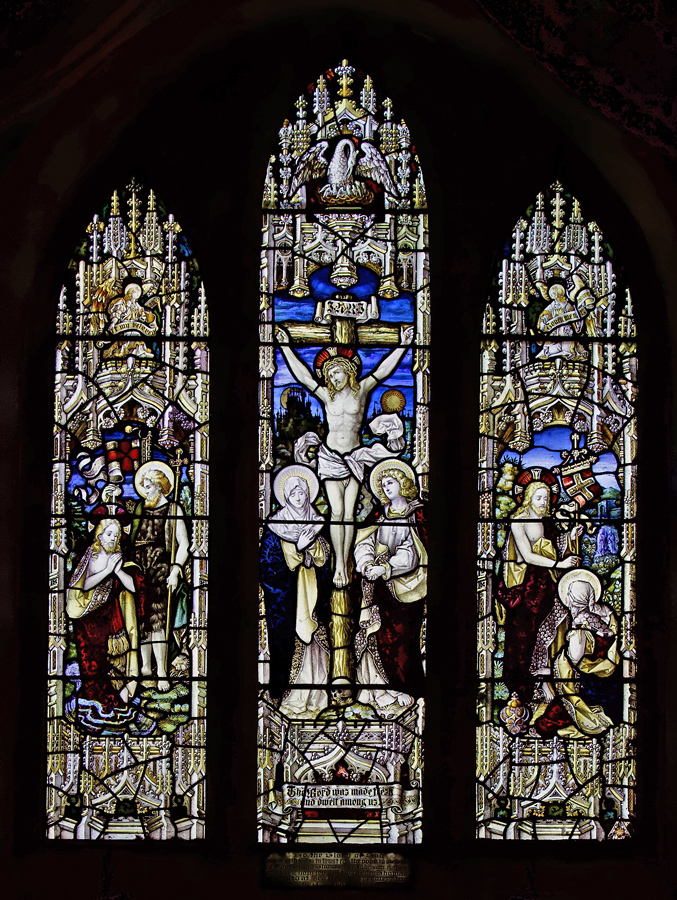
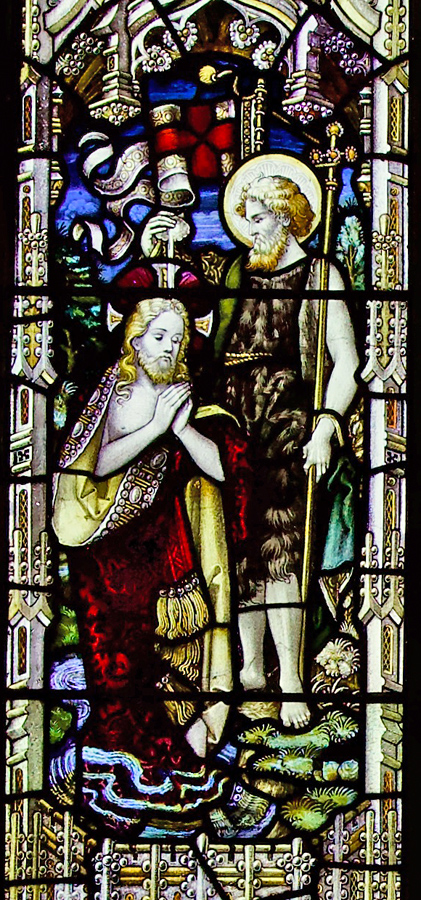
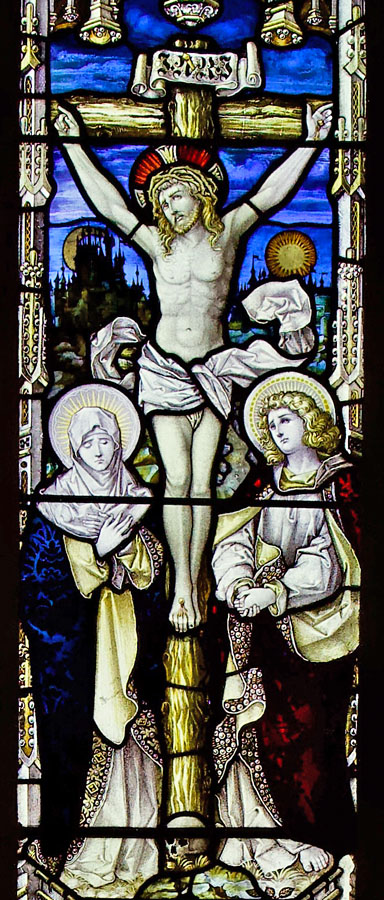
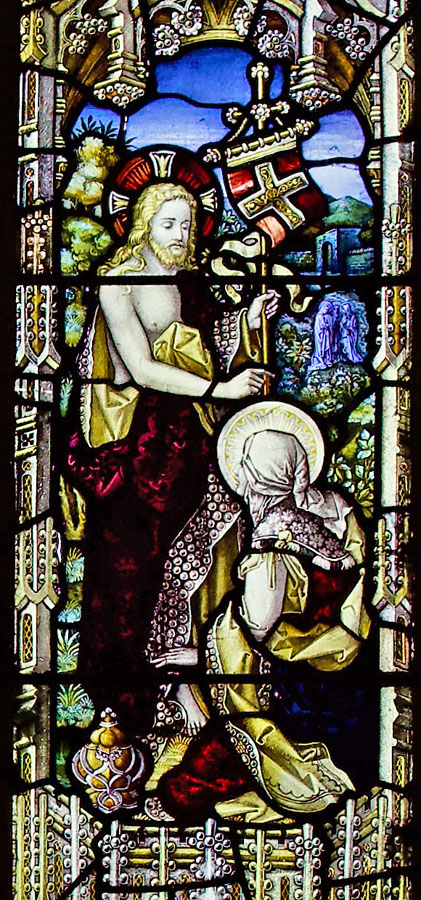
East Window. Baptism, Crucifixion, Resurrection. c1894.
Posted 28 April 2026.
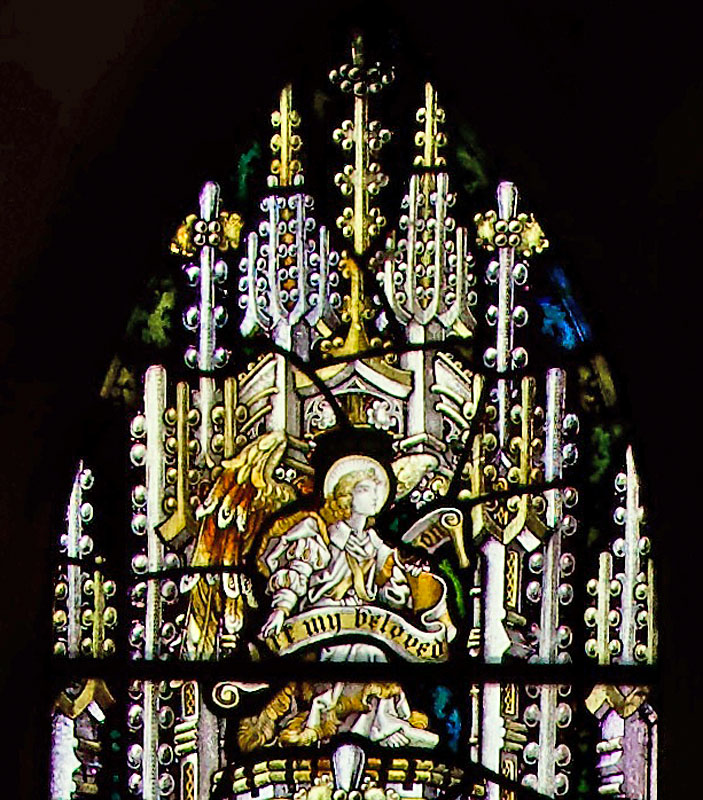
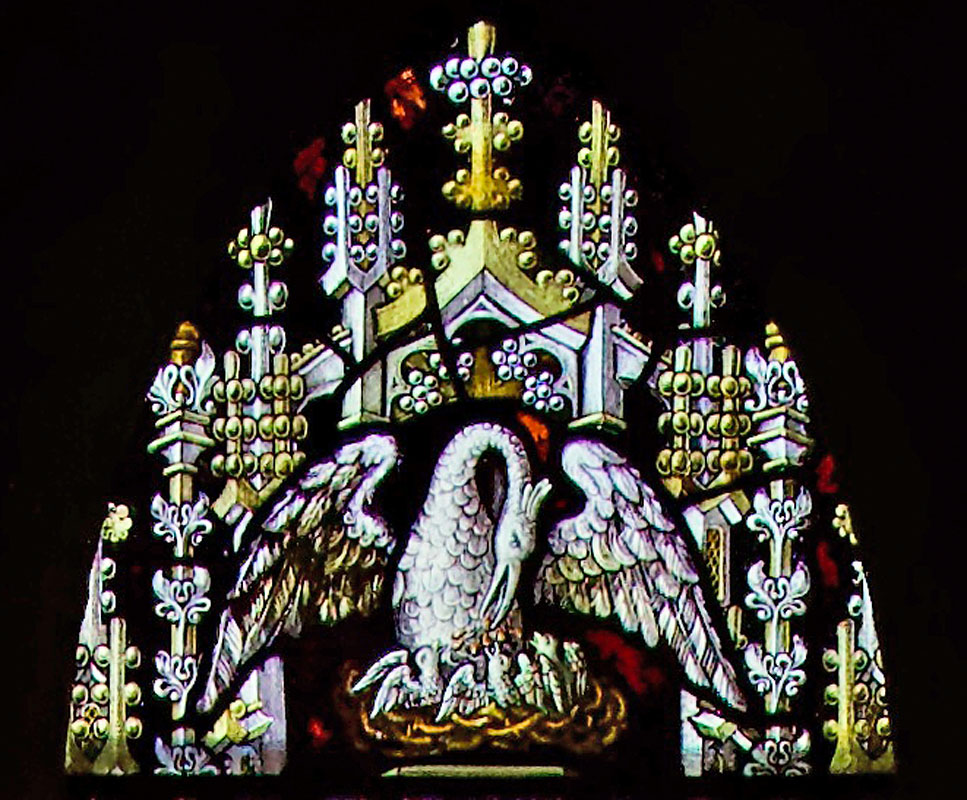
The east window of c1894 is an early example of the output of the firm of Percy Bacon & Brothers. Across three lights, it represents the baptism, crucifixion, and resurrection of Christ, each scene independently framed in its light by a highly elaborate architectonic niche with soaring canopies, and wide columns of predominantly white glass. This fulfils many of the requirements outlined in Bacon's manifesto of 1894.1 The crucifixion scene is clearly after Schongauer. In the canopies of the outer lights angels hold scrolls: Left: "[This] is my beloved son." Right: "Touch me not." At the top of the centre light, a pelican in its piety.
The style of the figurative work is much like the east window at St Mary's, Mary Tavy, Devon, which was installed in the same year. It is clearly not by the hand of Percy Bacon himself, and may have been painted by his older brother Herbert.
A brass dedication plate fixed to the wall below the window reads;
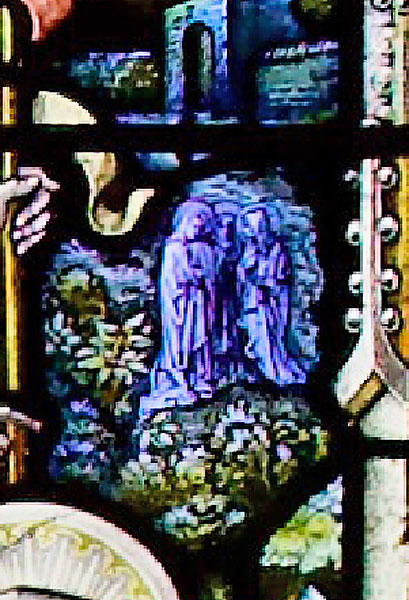
In the background of the light representing Jesus appearing to Mary Magdalene three figures can be seen approaching. This is another example of Bacon including the gospels' different telling of the story of the resurrection of Jesus into a single scene. This conflation would be a recurring theme in coming years as can be seen in windows at Sandridge, Hertfordshire (c1899), Westbury-on-Trym, Bristol (1904), Watchet, Somerset (c1920).
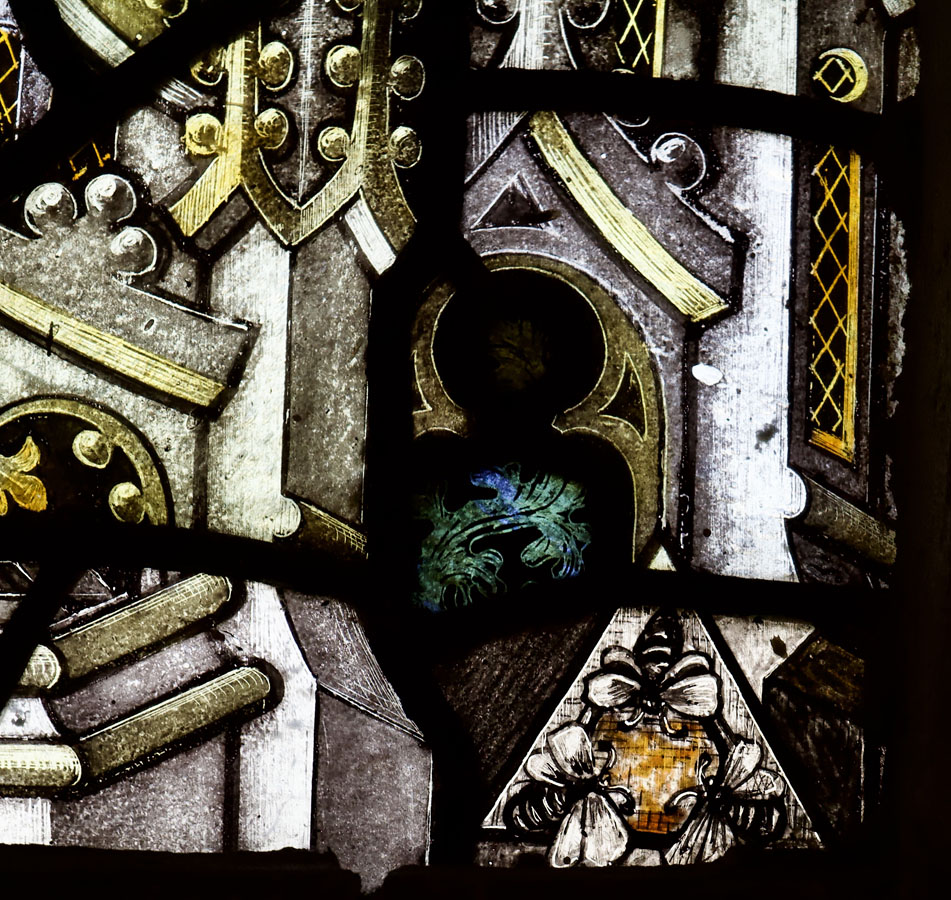
The window is signed with the Three Bees rebus.
References: Use your browser's Back button to return to text.
- Lecture given by Herbert Bacon to the Northern Architectural Association 17th January 1894.
- Hodgson, John Crawford: A history of Northumberland, Vol VI, Hexhamshire, Pt II. 1897. P29.
Location Map:
Sat Nav Post Code: NE47 0HD