
Theories for the purpose(s) of low side windows
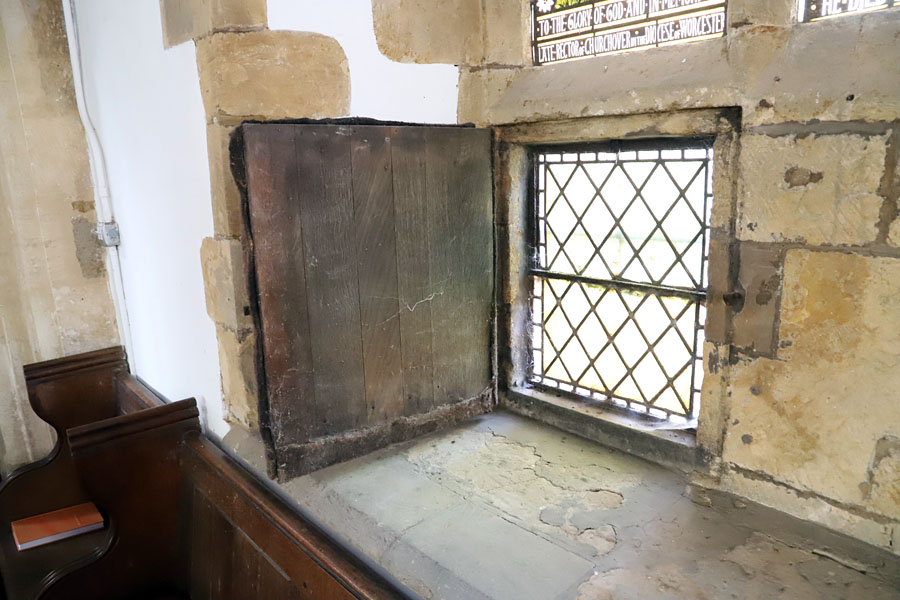
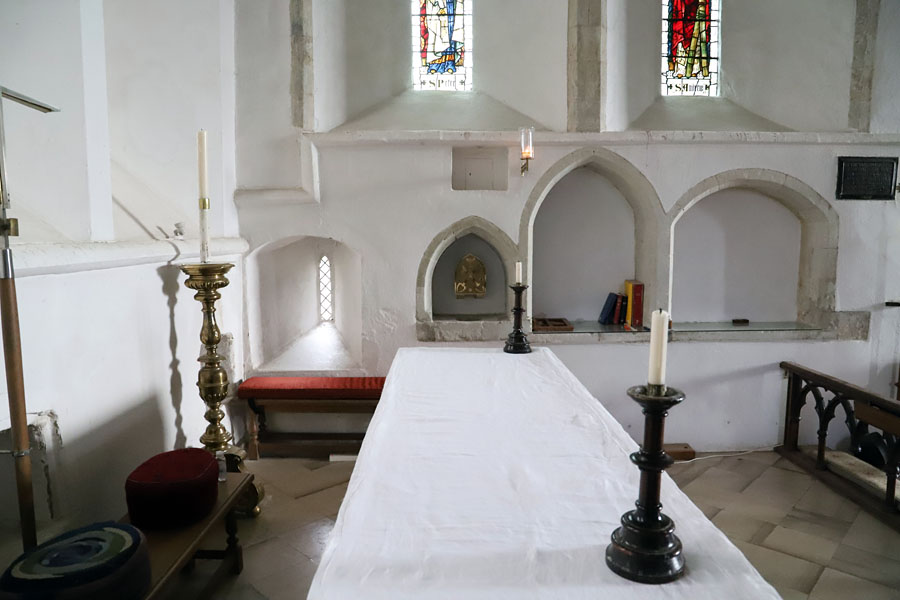
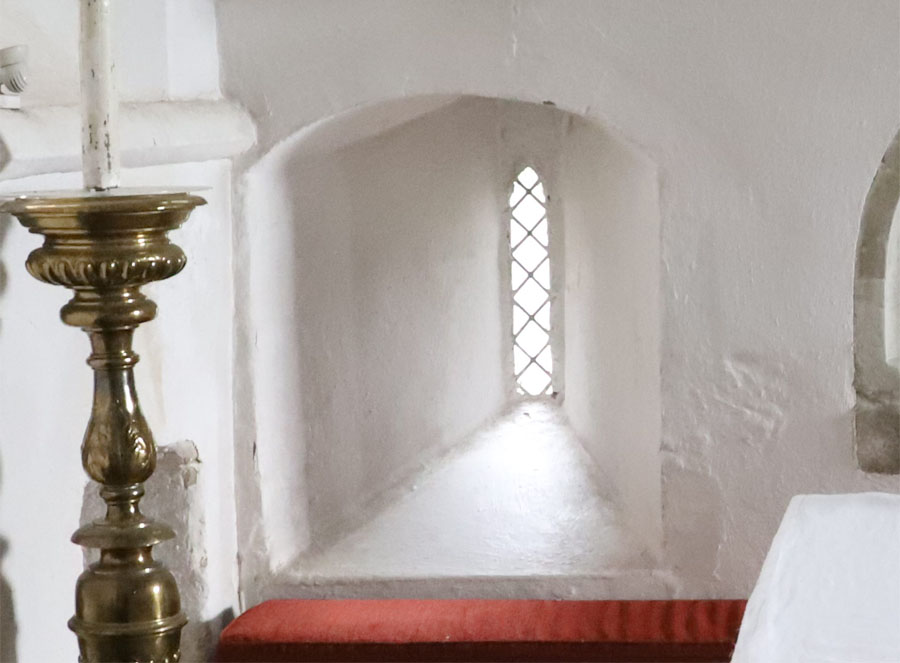
St Mary Magdalene, Wardington, Oxfordshire. Internal view of a shuttered
low side window in the north of the chancel.
Many theories for why low side windows were installed have been advanced over the years, a number of them rather fanciful. So far, no reference has been found to fully corroborate any of these theories, and in most of the available literature on the subject the proponents of the theories do not provide citations to back them up, other than passing mention of other antiquarians who have bothered to exercise their minds on such matters.
I will deal with the most easily rejected theories first, providing objections as necessary. Here I draw heavily on Houghton, Hogdson, and Piggot.1
- For ex-communicated persons doing penance before entering the church.
Objection: The Rev J. F. Hodgson, vicar of Witton-le-Wear until 1922 describes this theory as, “Unhistoric and preposterous.”2 - To place a light in order to scare away evil spirits from the churchyard. The Rev J. F. Hodgson expands considerably on this, suggesting that low side windows were installed for the purpose of displaying “mortuary lights” at night, “for the satisfaction of the living, if not the dead”.3
Objections: A burning candle would scarcely be sufficient to scare anyone, let alone an evil spirit intent on mischief. The fact that the openings were unglazed would risk the candle being blown out, or worse still, blown over risking setting the church ablaze. There is also no reason for such a lantern to be placed just east of the chancel arch as many low windows are. It could just as easily been placed in another part of the church, or even in the churchyard itself, perhaps on a pole, the latter being safer than leaving a burning light unattended inside the church. - A Lychnoscope through which people could view the paschal light at Eastertide, it being the custom to keep lights burning before the Easter sepulchre from Good Friday to the dawn of Easter Sunday. Piggot suggests that this theory was advanced by The Cambridge Camden Society in “Few Hints on Ecclesiastical Antiquities.”4
Objections: The Easter sepulchre was rarely in a position which could be seen from the LSW. Bond and Piggot assert that many parish accounts also show that men were paid to stay inside the church to watch the Easter sepulchre and lights other than the Paschal Candle were used for the purpose.5 6 Moreover, if men had routinely been inside the church during Easter, the church would have been readily accessed by any person wishing to view the Paschal Light from inside. Piggot reinforces this view; “…although the item ‘watching the Pasch light’ occurs perhaps not unfrequently, yet devotion was seldom at so low an ebb, particularly in the 12th century, to make such a provision in the fabric of the building necessary.7 Furthermore, Pascal Candles were usually very large, and would have been too big to fit in many of the relatively small LSW apertures. - A Lychnoscope for viewing the Holy Rood.
Objections: Similar to that of the preceding theory many windows would not fulfil this function, and even if it did, the viewer would only get a view of the back of the rood. - For acolytes to pass the thurible through so that it might have the benefit of being made red hot in the open air prior to incense being added.
Objection: Many windows were too small, or fitted with bars making this impossible. - To permit someone in the church to keep a lookout for the approaching priest or funeral procession, and ring a bell to alert the people inside.
Objections: If it is to be supposed that it was routine for the people to arrive for services before the priest or funeral procession, and they were a feckless bunch, possibly succumbing to slumber before the priest rocked up, and therefore in need of awakening by the ringing of a bell, then this theory might hold water. However, the same could be achieved by the bell ringer standing in the church porch, or near the main entrance. A small hole with a cover in the priest’s door would also serve the same purpose making a LSW unnecessary. - In connection with the burial of the dead. In a letter to The Builder, the well-known London architect, William White, F.S.A. came up with this rather fanciful theory: “I think it will be found that in nearly all cases they overlook that portion of the churchyard which was used for burying. And prior to the period when the body was brought into the church, it was the custom to open this window for the priest to say the greater part of the office. In several notable instances there is on the jamb of the window a projecting book-ledge, which would indicate some sort of office being said within connected with an outside ceremony, the window being in all cases shuttered and not glazed.”8
Objection: To suggest that the windows in “nearly all cases” overlooks the area where the dead were buried does not bear the most cursory examination, and has to be one of the most crack-pot ideas to have been floated. - To give light to the reader of the lessons during services, or for the priest to read the Book of Hours etc. especially when many other windows would have been filled with stained glass, pitching the chancel into a perpetual twilight.
Objections: Given the relatively high cost of stained glass before the 15th century, few churches would have been endowed with enough to darken the chancel so much that additional light shining directly on a reader’s texts would be required. Candles could just as easily have been used. Also, as the opening was unglazed the reader would be perpetually at risk and inconvenience of draughts. If LSWs were installed for this purpose they would have been glazed with plain glass. - The “Vulne” window theory; that LSWs symbolized the wound in the side of Christ on the cross.
Objection: In Catholic art Christ’s wound is generally on his right side. If the chancel at the east of the church represented Christ’s head, then the prevalence of LSWs on the south would put them on the left of his body. Furthermore, where churches were cruciform with transepts representing Christ’s outstretched arms, the location of the LSWs (being in the chancel to the east of the transepts) would make them represent a “wound” above his shoulders. - The Hagioscope theory: That those who were not permitted to enter the church would be able to witness the Elevation of the Host by the priest at the high altar.
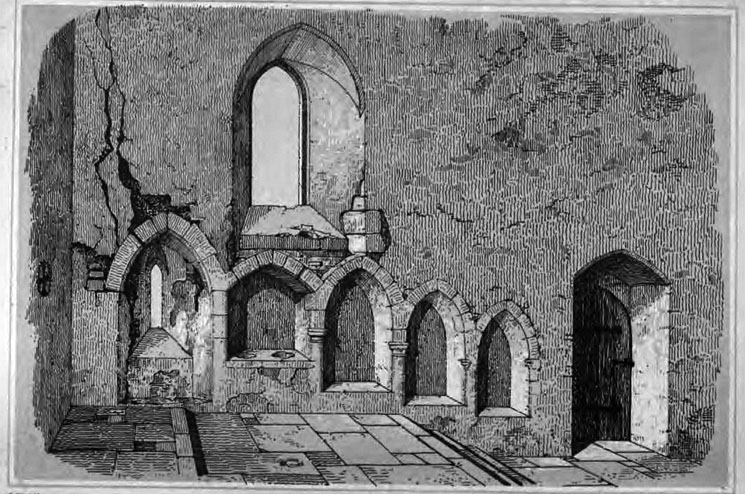
Objection: Firstly, and fatally for this theory, it is impossible to see the high alter from the vast majority of LSWs. At Pattenhall, Northants, the now blocked LSW just east of the chancel arch has an internal splay towards the west, but no splay to the east. Secondly, in a great many cases, only one person at a time could have been witness to the act through the LSW, so if this theory were to stand, it would conjure up in one’s imagination an unseemly scuffle outside the church of people jockeying for the best view at the most sacred moment in the mass! There is an example of a low window in the south wall of the chancel at Holy Trinity, Stow Bardolph, Norfolk, which looked directly onto the altar, and this example was mentioned by numerous writers on the subject. This curious, though not unique window (there is another example at St Peter, Limpsfield, Surrey ), situated to the east of a four seat sedilia is a narrow lancet whose base is no more than 500mm above the chancel floor. Although this window is now internal to the fabric of the church, it having been enclosed by a modern vestry, it once provided a view of the altar to anyone outside as this drawing of c1850 shows. This may, however, have been for the use of an anchorite walled up in a cell outside, as Rotha Clay mentions this church as having one.9 - The “offertory window” theory: This theory suggested that LSWs were intended for recluses or anchorites walled up in a wooden or stone shed attached to the outside of a church to put their hands through and make the due oblations at the Eucharist. Philip Mainwaring Johnston in his article on the low side windows of Sussex churches suggests that anchorites who were ordained priests and walled up in a cell attached to a church would hear the confessions of passing pilgrims through an opening in an external wall. He cites two recorded instances; that of Richard II who, before going to meet Wat Tyler confessed to an anchorite, and also of Henry V who, after the death of his father went by night "to the Recluse of Westminster, a man of perfect life, and unfolding to him the secret of his whole life, being washed in the bath of true penitence, received against the poison of his sins the antidote of absolution." 10 MrJohnston, goes on to suggest that if this practice existed in the 12th century, it may have been continued by regular priests in later centuries (see below for a fuller discussion about the confessional theory for the existence of low side windows).
Objections: There is little evidence for external shelters or anchorite’s cells. Also records for the existence of anchorites in England are far fewer than the number of LSWs. - For the distribution of alms.
Objections: Bond asserts that there is no record of alms being passed through the windows, and gratings or bars would, in any case, get in the way. Some are far too small to be used for such a purpose. The objection outlined for the passing of a thurible (4 above) can also be brought to bear. Also why go to the trouble of installing a LSW when alms could be more easily given out in the church, in the open air, or in a person’s home. - To provide ventilation (e.g. to allow smoke from incense to dissipate, or air the church): It was contended by some that the build-up of incense and smoke from candles required additional ventilation. Clearly any aperture would need to be accessible, and so relatively low down, and able to be opened from the inside.
Objection: The opening of a door would satisfy the same outcome, and there are many instances of priest’s doors adjacent to low side windows which would have completely eliminated the need for a LSW. Furthermore, the installation of a casement opening in an existing window would serve the same function and be considerably easier, and cheaper to execute. Some LSWs are so low down, or so small as to not be able to fulfil this function (e.g. St Nicholas, Dersingham, Norfolk). Conversely, some low side windows are large, such as the one at St Peter & St Paul, Broadwell, Oxfordshire. This particular one is nearly as large as the adjacent priest’s door, rendering it entirely superfluous when the door could just as well be opened to ventilate the church. “I. H. P.” writing in the Archaeological Journal in 1897 pointed out the evident improbability of the theory, as there is no particular reason for selecting the common position of these windows; i.e. at the south west corner of the chancel.11 This theory was promoted quite recently in a 2006 article in Ecclesiology Today.12 The author seems to have ignored I. H. P.’s opinion. - For the exposition of relics: Many medieval churches would have collections of saints’ relics; a bone, a lock of hair, a piece of clothing attributed to the saint, or even the entire body. These were mainly used to extract money from those who prayed before them for the intercession of the saint in question. The belief in the healing power or relics was (and still is) widespread. Fuelled by Christian’s belief in the afterlife and resurrection, in the power of the soul, and in the role of saints as advocates for humankind in heaven, the veneration of relics in the Middle Ages came to rival the sacraments in the daily life of the medieval church.13 Relics were not confined to the great cathedrals or collegiate churches. Even small parish churches might claim to possess a relic; St Gregory’s at Offchurch, Warwickshire, for example, claimed to retain the remains of St Fremund (later translated to Cropredy, Oxfordshire). Relics of St Walstan were housed at Bawburgh, Norfolk.
Objection: Saints’ relics would have been securely locked in a reliquary inside the church. These were very valuable commodities which attracted paying pilgrims, and were not infrequently “co-opted” by other institutions. Again, why go to the bother and expense of installing a LSW when the relics could just as easily have been venerated inside the church. - To provide light for a priest’s vestry. Only Piggot mentions this theory, calling it, “One of the most absurd”, and does not cite its origin.
Objections: Piggot provides his own objection: “But the vestries have vanished without leaving a trace, and this position could not have been chosen for a vestry, particularly where the chancel was stalled.”14 - The Outlaw Theory. Writing in The Antiquary in January 1891, a Mr Cayley put forward the rather fanciful theory that LSWs were installed during “troublous times” that England went through from the eleventh to the sixteenth centuries, during a period when, “… the country was overrun with outlaws (the greater part of whom were political outcasts rather than criminal offenders)… ”. These outlaws, Mr Cayley asserted would be subject to arrest at any moment, and therefore dared not enter a building for fear of a surprise. His rather dubious conclusion was that LSWs were installed to allow outlaws to give their confession in the open. He backed his theory by stating that no LSWs are found in churches within walled towns, as outlaws were want to hide away in forests, “… the haunts of [the likes of] Robin Hood”.
Objections: Apart from the ridiculous nature of this theory, one would be hard pressed to believe that every corner of the country was home to sufficient numbers of criminals on the run, and hiding away in forests to warrant the installation of that many LSWs.
- The “leper window” theory: This theory gained a great deal of currency amongst antiquarians of the 19th and early 20th centuries, and became dominant in the popular imagination of laypeople and experts alike, so much so that the theory is often quoted today, it being so difficult to dislodge. It supposes that LSWs were installed to permit a leper, to participate in the Eucharist.
Objections: The same objection as the offertory window theory (No. 9 above) can be cited. Furthermore, lepers were not permitted to enter the churchyard, let alone the church itself. A secondary objection is that lepers were usually confined to hospitals specifically built to house and care for them. Such establishments were endowed with a consecrated chapel where a priest could attend directly to the inmates’ spiritual needs, negating the requirement for them to attend a parish church. Also, the social stigma and prejudice attached to lepers being “unclean” would create in them a natural state of embarrassment, a desire for them to keep themselves out of sight, and a reluctance to go gambolling about the countryside attending churches with the likely jeopardy of being forcibly driven away by the local population. It should be noted, however, that the same objection is not sustainable when we speak of other communicable diseases such as measles or rubella as, unlike in the case of leprosy, there was no universal prohibition for sufferers to be denied entry to the churchyard. However, it would be expedient to deprive them entry to the church and direct contact with the priest or other parishioners. Alexander Hamilton Thompson advanced a compelling argument to debunk the leper window theory:We will revisit the subject of disease later in this essay.
"Most popular [theory for the existence of low side windows] has been the the idea that they were used by lepers, who could not take part in the common services of the church, but could assist at mass and even be communicated with throuigh these windows. This fancy disregards the sanitary precautions of the middle ages, which were excellent and plentiful. We may well believe that the people of Burton Lazars would be horified, if they had seen, one Sunday morning at mass, their two low side windows darkened by sufferers from the dreadful disease, for whom a hospital with its chapel was carefully provided in their own village." 15
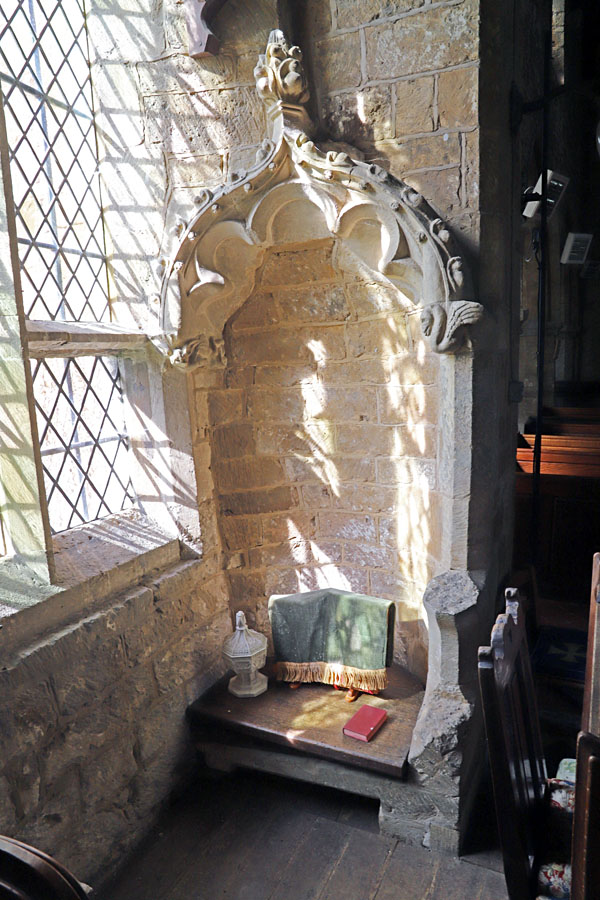
- The “confessional window” theory. This theory suggests that LSWs were installed so that a parish priest could hear outward confessions by those not permitted to enter the church.16 It gained some support by reference to the many churches which have internal seats next to the LSW on which a priest might sit, an elaborate example of which can be seen at
St Giles’, Wiggington, Oxfordshire.
Seat backs carved in the slays of the window can also be seen at St Peter's, Melton Constable, and All Saints, Upper Sheringham, both in Norfolk. At Melton Constable the transomed lancet also has a wooden shutter in situ.
Objections: Some openings are so low down that both the priest and penitent would need to lie down. However, these are few and far between, and could be explained by changes in ground levels over the centuries. Some churches have two or more LSWs, so why was there a need for more than one confessional window? Confession in medieval churches was given inside open church where others could observe the penitent (especially important for female penitents), but not hear them, the priest sitting on a chair near, but not in the chancel (confessional booths we see today were not introduced until the 16th century). If hearing confession through an opening in the wall of the church were commonplace in medieval England, why do so many pre-reformation churches not possess, and have never possessed them?
- The “Sanctus bell” theory, also known as the sacring-bell theory. The origin of this theory seems to have been prompted by a constitution of Archbishop John Peckham (1279 – 1292) (Constit. Joh. Peckham, A.D. 1281): “In elevatione vero ipsius corporis Domini pulsetur campana in uno latere, ut populares, quibus celebrationi missarum non vacat quotidie interesse, ubicunque fuerint, seu in agris, seu in domibus, flectant genua” ; “But at the elevation of the Lord's body itself, a bell should be rung on one side, so that the common people, who do not have time to attend the celebration of Mass every day, wherever they may be, whether in the fields or in their homes, may bend their knees”.
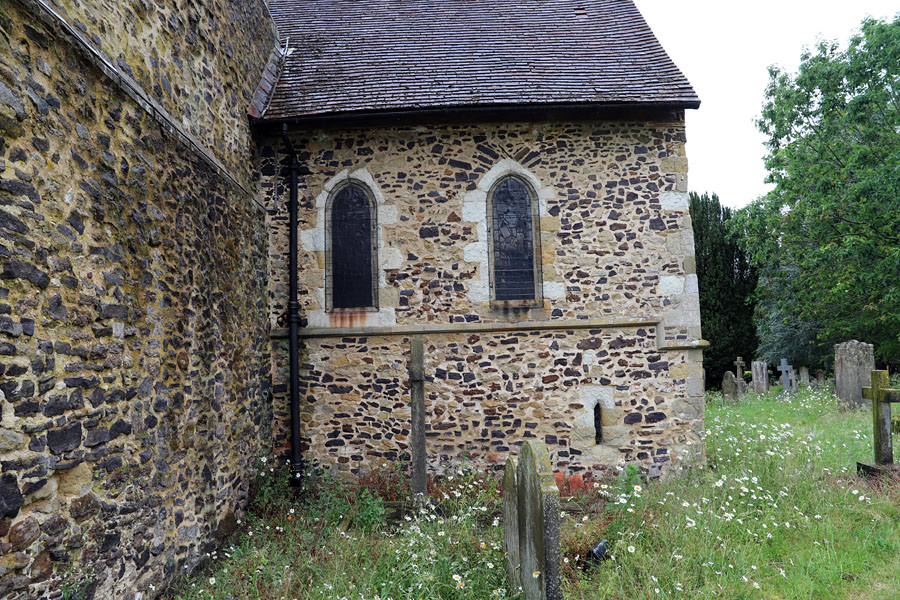
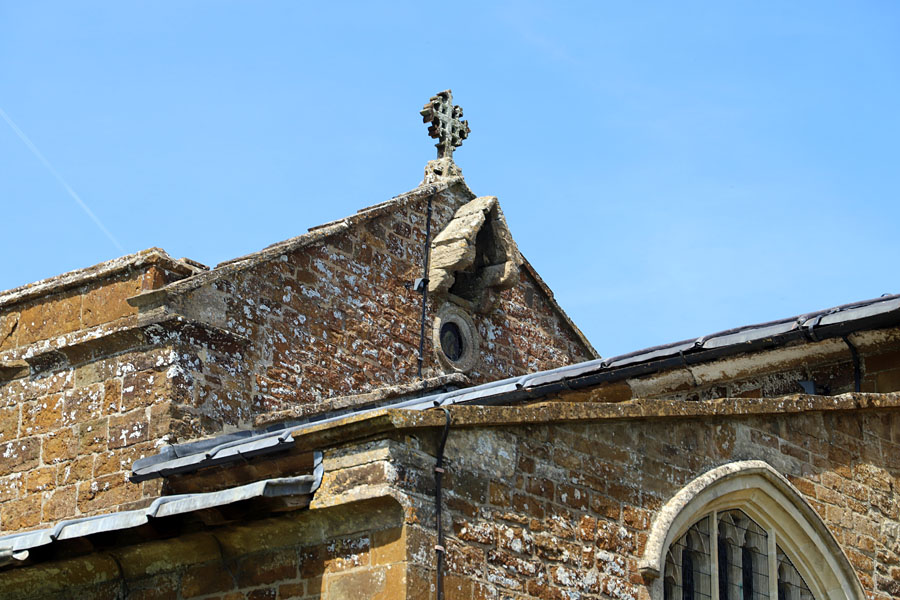
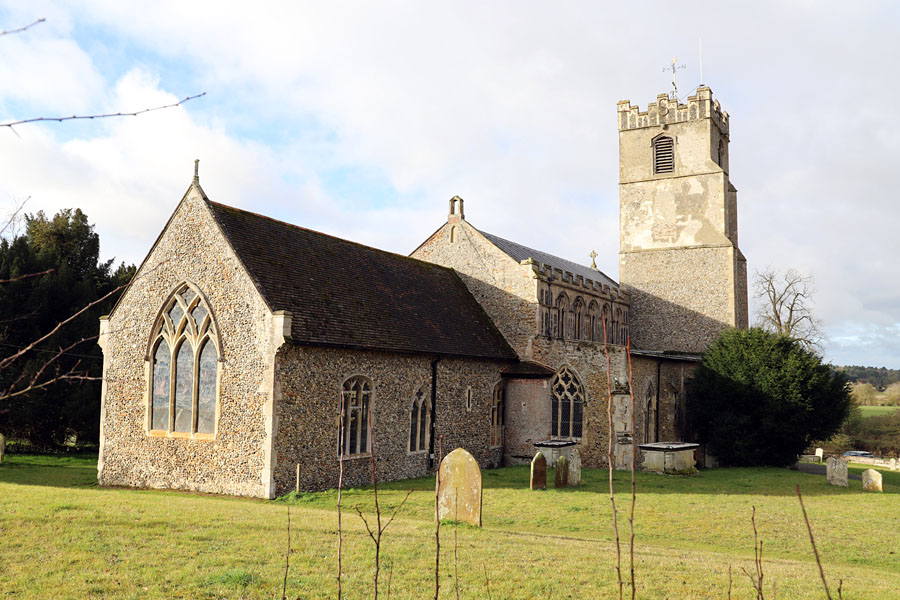
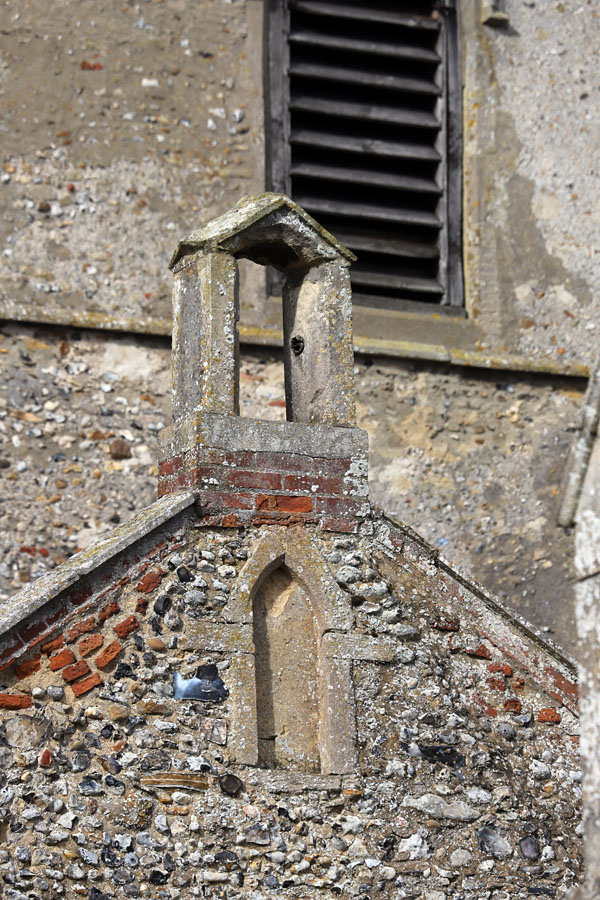
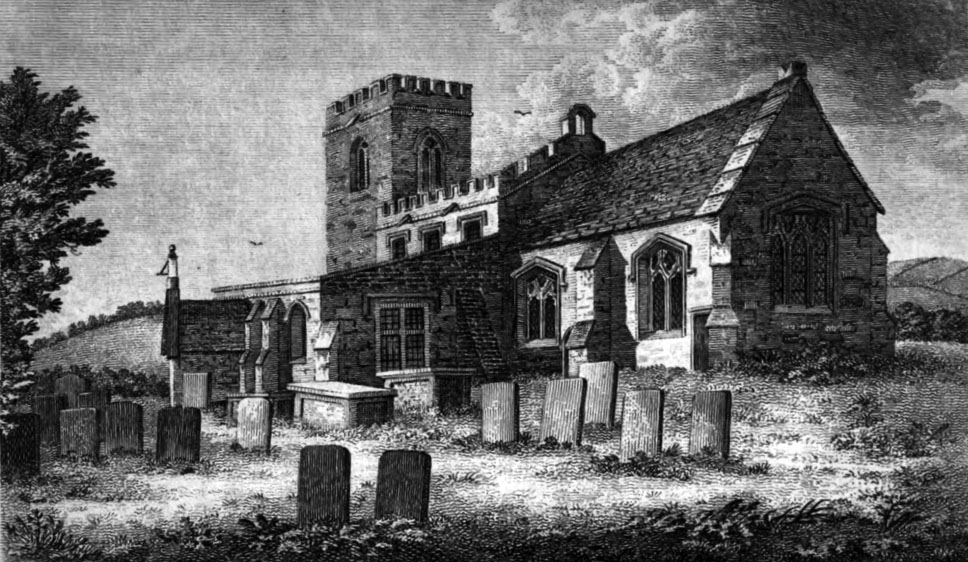
Objections: These are numerous. Firstly many LSWs were/are too small, or too low down for a hand-rung Sanctus bell to have been poked through before ringing it, and with the depth of church walls in many instances exceeding the length of an arm would have required the bell to have been rung dangling from the end of a pole. Many (or perhaps all) LSWs were equipped with bars making matters worse. Secondly, and rather fatally for this theory, Sanctus bells are rather small and would not be heard at any distance from the church, let alone in the fields and homes of busy parishioners. To reach further afield, and if a Sanctus bell was to be rung as part of the ritual, it would have made much more sense to hang a larger, more audible bell high up on the eastern gable of the chancel or nave and have it rung using a rope running through an aperture in the wall, and via a series of pulley wheels. Extant examples are rare, but there is a good example at St Mary Magdalene, Wardington, Oxfordshire. At Wardington, the bell-cote is late c13, while the low side window is c14. All Saints, Worlington, and St Mary's, Coddenham both in Suffolk, also have a bell cote fixed to the eastern gable of the nave. Likewise All Saints, Lilbourne, Northamptonshire, had a bell cote (now removed) on the eastern gable of the nave, but also a low side window on the north west end of the chancel. All these examples have apertures in the east gable wall just below the bell cote through which a rope could be passed, making a low side window for that purpose unnecessary. Sanctus bell cotes were not uncommon in the late medieval period, though seemingly not universal. Cautley, in his survey of Suffolk churches cites 91 examples in the county having sanctus bells which were disclosed in the visitation returns of 1533,17 though he only suggests that some of these had external bell cotes. Cautley also suggests that those churches without the means to erect an elaborate cote and cast a large bell, may have hung a small one externally, perhaps hanging from a simple bracket, with the low side window acting as the aperture for the bell rope. However, that would not explain why these windows were so oversized, or, in some cases, so elaborate, simply to facilitate the passing of a rope through the wall.18 The simple expediency of an external Sanctus bell on the east gable, and a small opening below for the rope to pass through would make LSWs unnecessary as a means to ring a bell through a low opening in the wall of the church. Moreover, the above examples have both a Sanctus bell cote and a low side window. These examples of churches with both low side windows and Sanctus Bell cotes raises a significant challenge to the Sanctus bell theory, and this is discussed in more detail on page 5 of this essay. Churches built in the 11th to the 14th century were not often endowed with western bell towers or cotes from the outset, only receiving these in the 15th century or later. Those churches which did have western towers when the practice of ringing a Sanctus bell arose would have needed a view of the altar from the ringing chamber, and Cautley notes 65 examples in Suffolk. Perhaps the most withering criticism of the Sanctus bell theory was from Philip Mainwaring Johnston who wrote:
Now that the extant theories have been covered, it would be of benefit to briefly discuss a couple of practices of the Catholic Church prior to the Reformation, particularly with reference to the presence of low side windows, and whether these practices could have had an influence on whether a window was installed. This will be especially relevant to the three favoured theories; i.e. the confessional window, the Sanctus bell window, and the “leper” window.
Back to Contents
References & Footnotes: Use your browser's Back button to return to text.
- See bibliography.
- .On 'Low Side Windows; By the Rev. J. F. Hodgson, M.A: Archaeologia Aeliana, Vol XXIII; 1902, p53.
- Ibid. p197.
- A few hints on the practical study of ecclesiastical architecture and antiquities for the use of the Cambridge Camden Society. 1843.
- Bond, F. An Introduction to English Church Architecture, 1918, p677.
- The Reliquary, Jun 1868; Piggott, J - On Lychnoscopes, p10.
- Ibid. p11.
- The Builder, Vol 64, 07 Jan 1893, p17. See also William White's essay, "An Antiquarian Problem: The Leper Window" in Ecclesiastical Curiosities. Andrews, W. 1899. p184 etc. In the essay he suggests that the priest would watch at the window for the funeral cortege to arrive and say a few words through it before going out through the priest's door to commit the body to the earth.
- Clay, Rotha Mary: The Hermits and Anchorites of England, 1914. Appendix C: p236)
- Johnston, P. M. The Low Side Windows of Sussex Churches; Sussex archaeological collections relating to the history and antiquities of the county. Vol XLII, 1898. P178.
- The Archaeological Journal, Vol 4, 1897, p326.
- Barnwell, P. S. Low side windows: ventilating a 170-year old controversy: Ecclesiology Today Iss. 36, June 2006.
- Metropolitan Museum of Art: Relics and Reliquaries in Medieval Christianity.
- The Reliquary, Jun 1868; Piggott, J - On Lychnoscopes, p10.
- Thompson, A. Hamilton; Historical growth of the English Parish Church, 1913, p92.
- One writer suggested that “outward confession” had been misinterpreted as meaning “outside confession”. However, outward confession is that which is given verbally to another (i.e. a priest).
- Cautley, H. M. Suffolk Churched and their Treasures, 1938. p44.
- For examples of elaborate low side windows, see pages 9-12, notably, Dersingham (Norfolk), Essendine (Rutland), Stanningfield (Suffolk).
- Trans.St Paul's Eccl. Soc. vol IV, 1890, p269.
- Stamford Mercury 04 February 1927, p4.