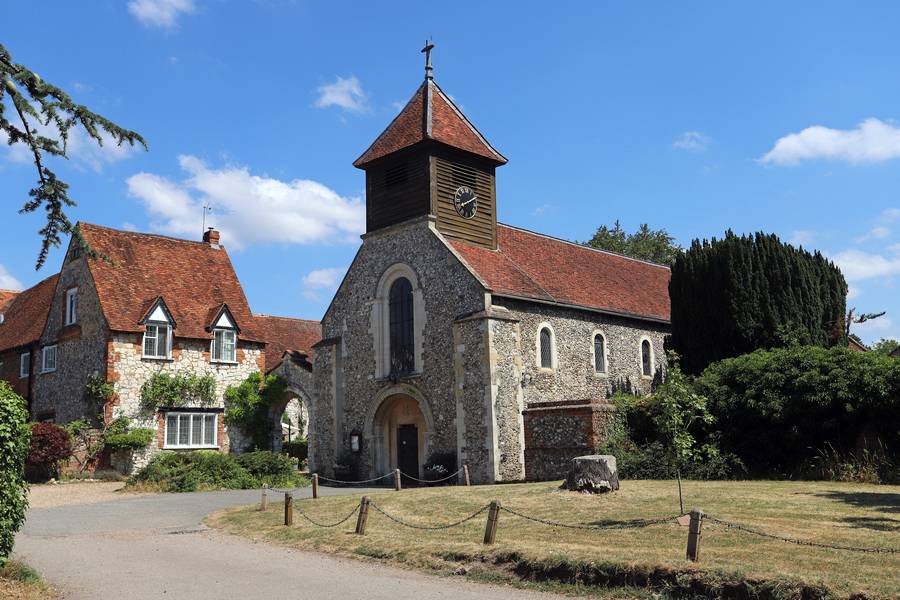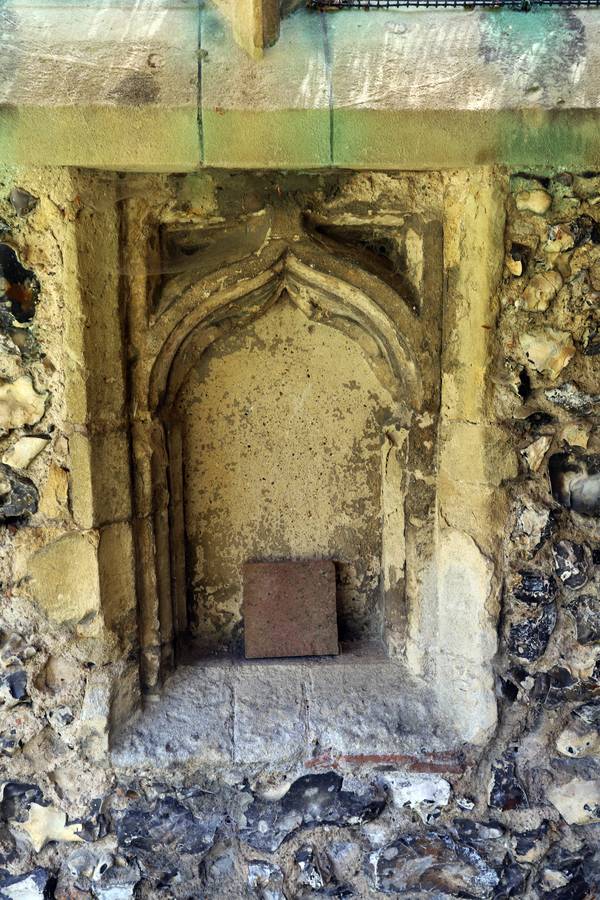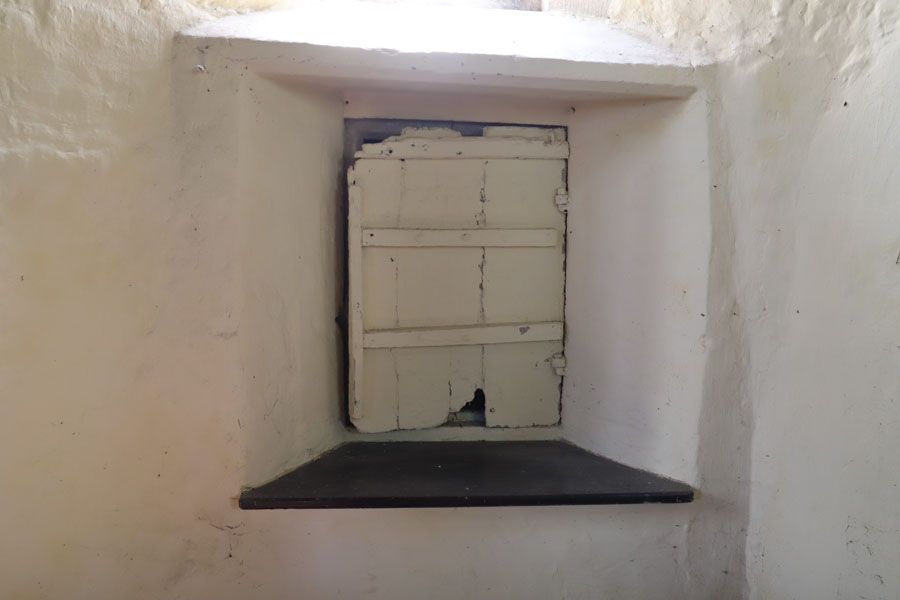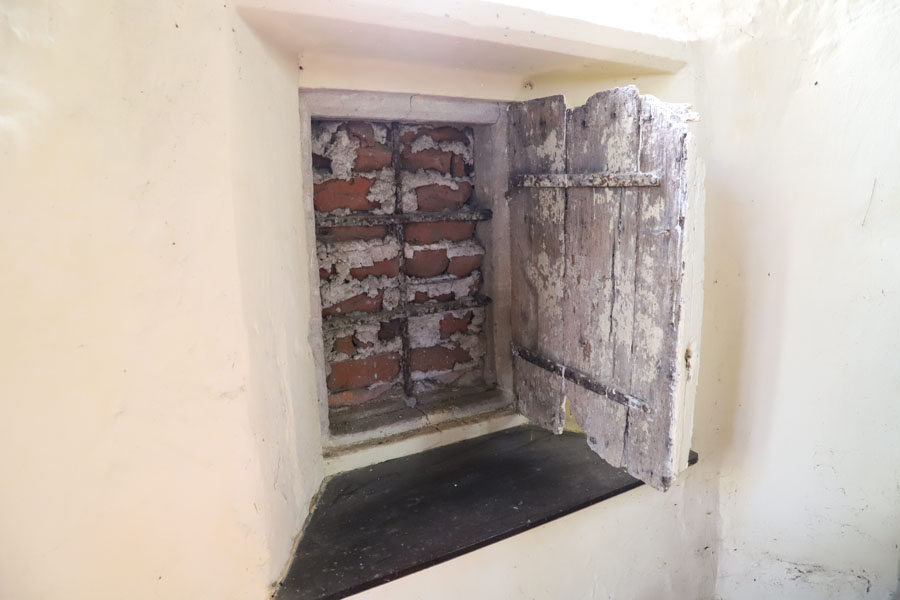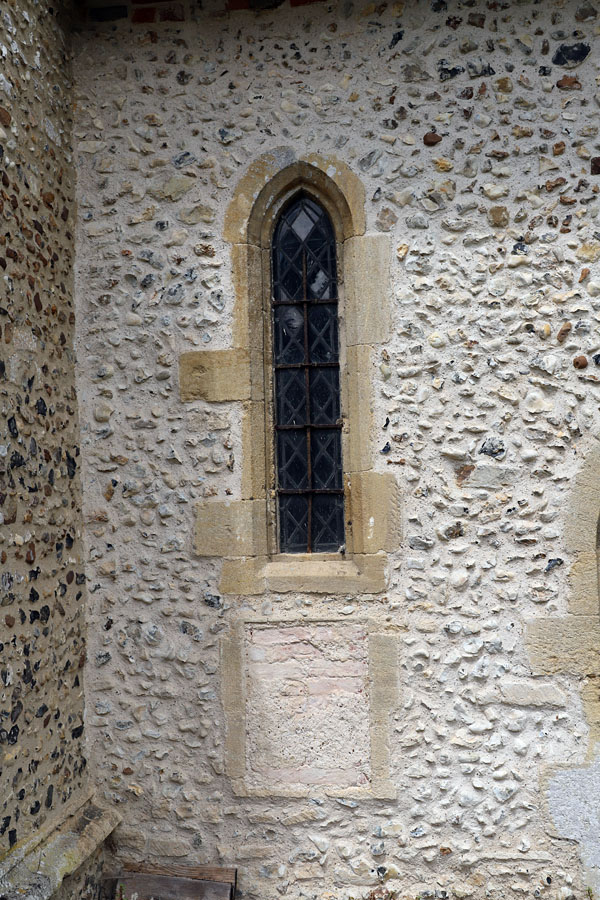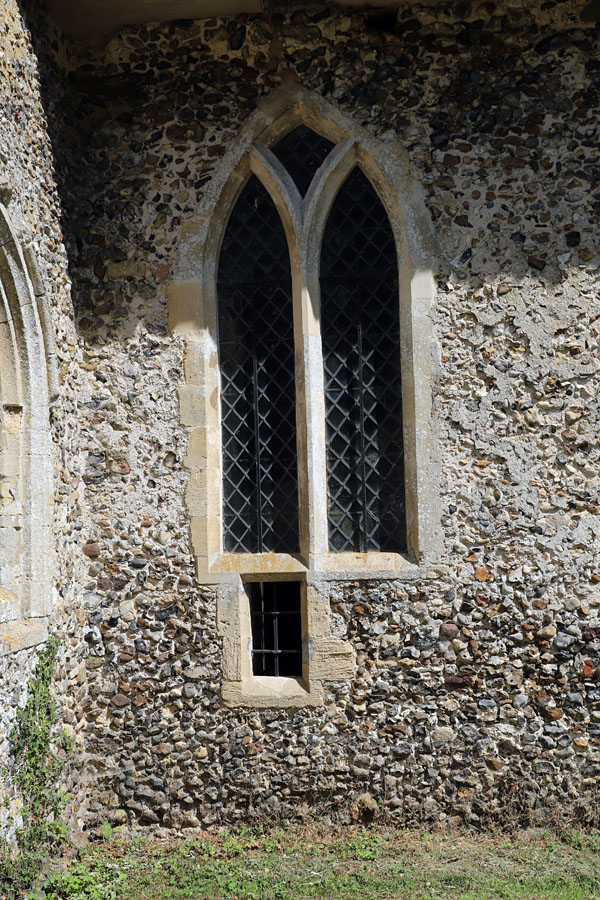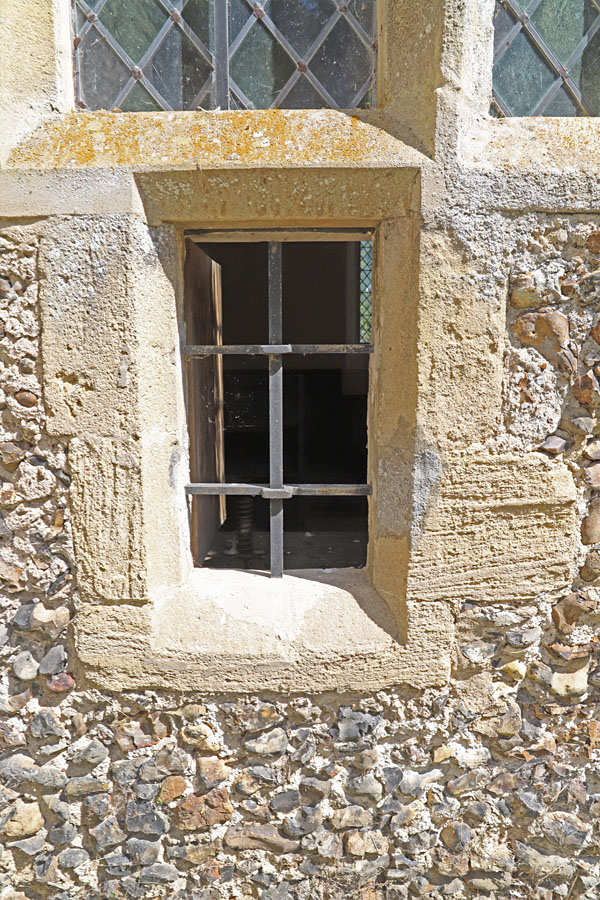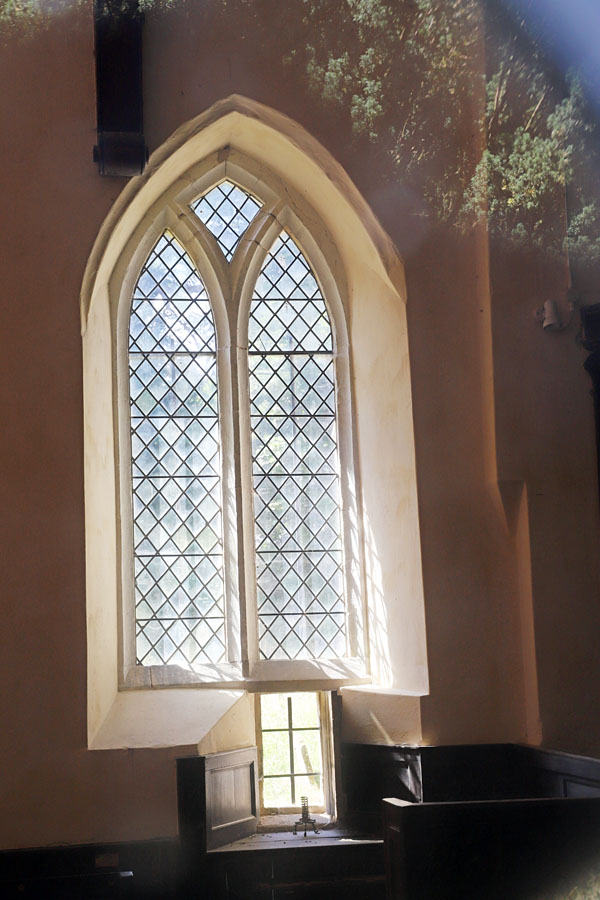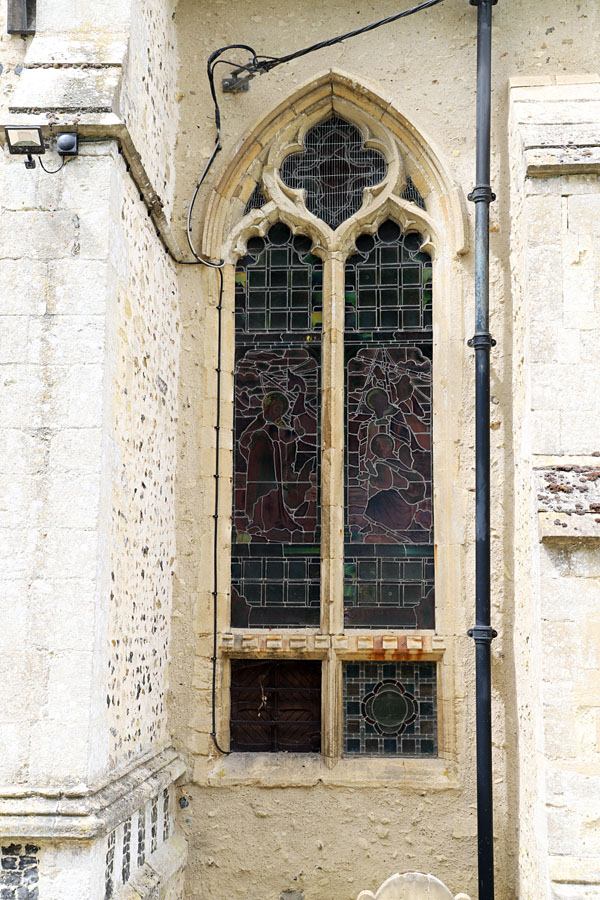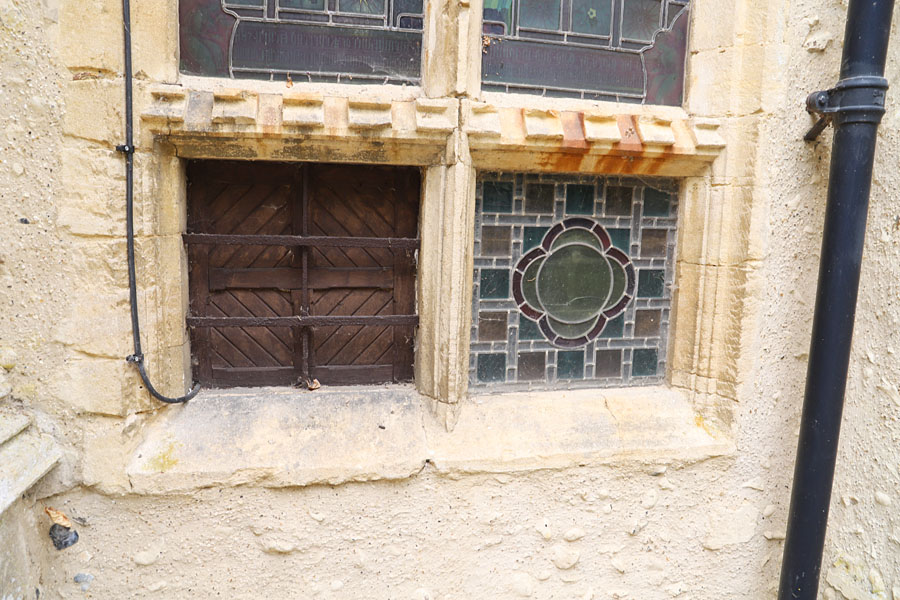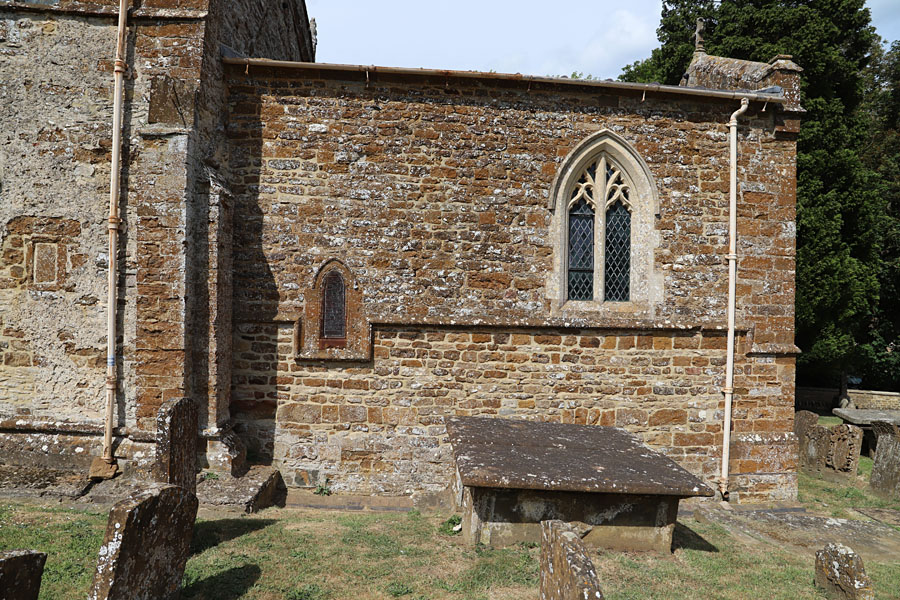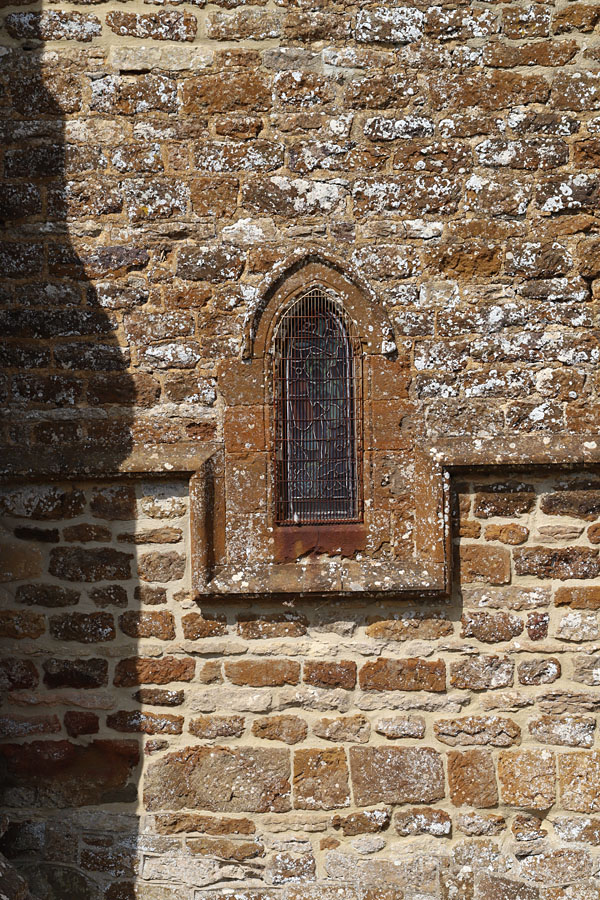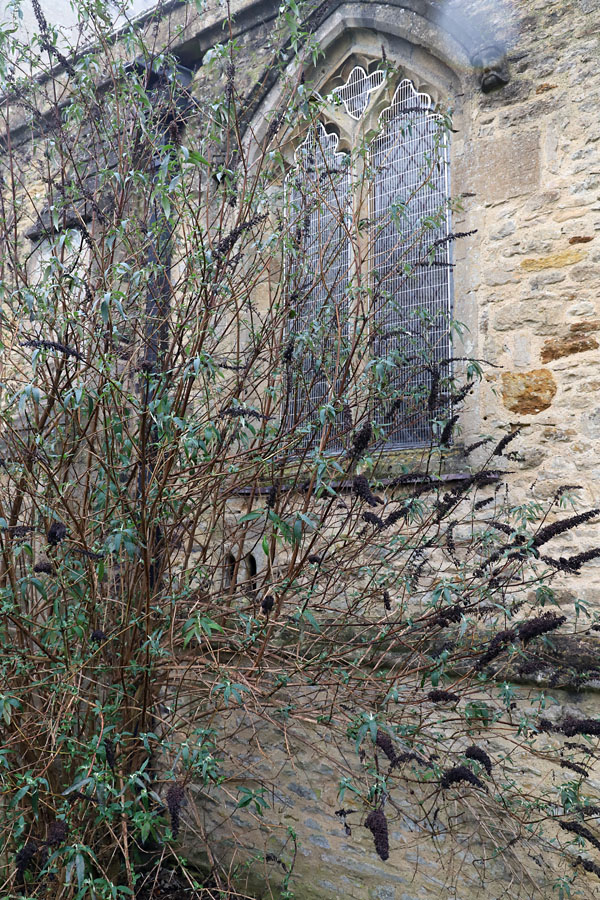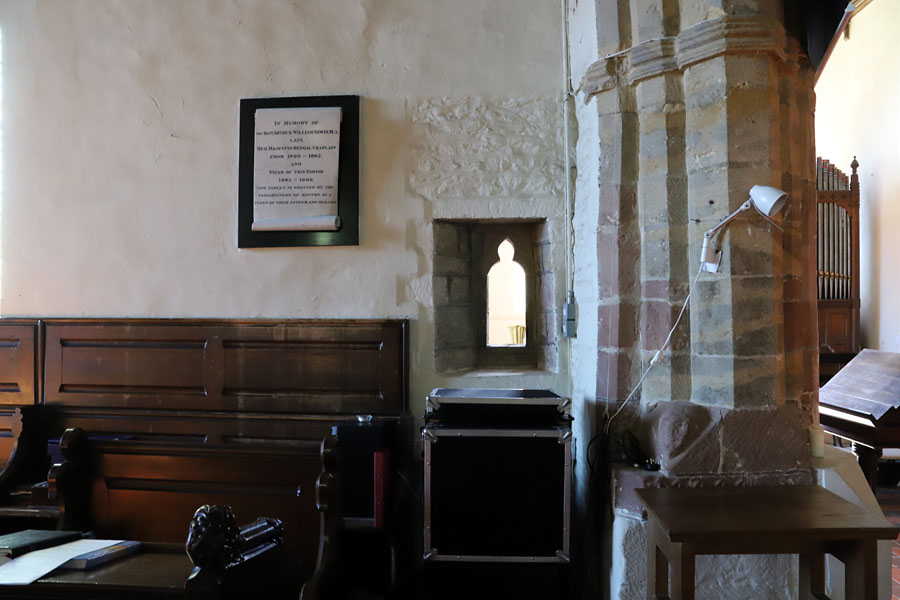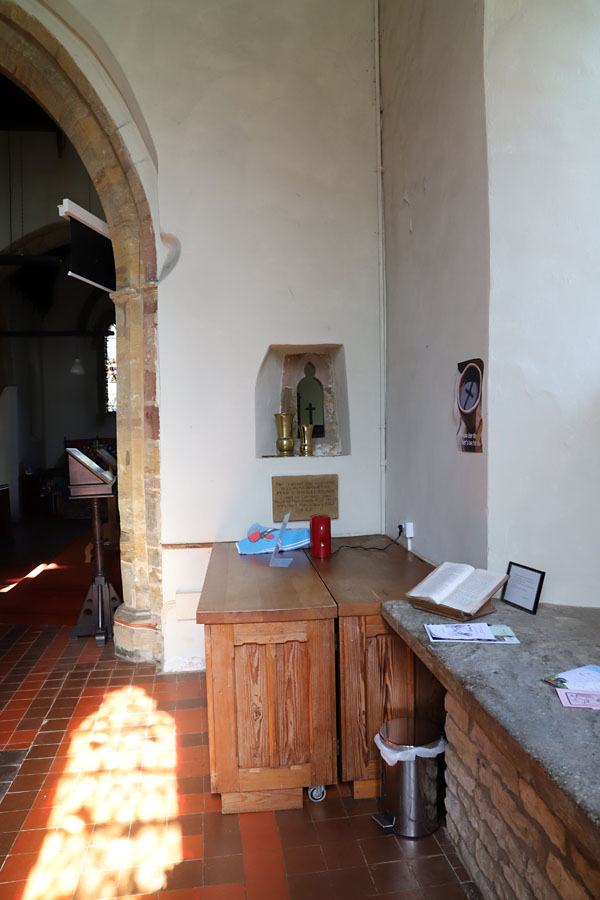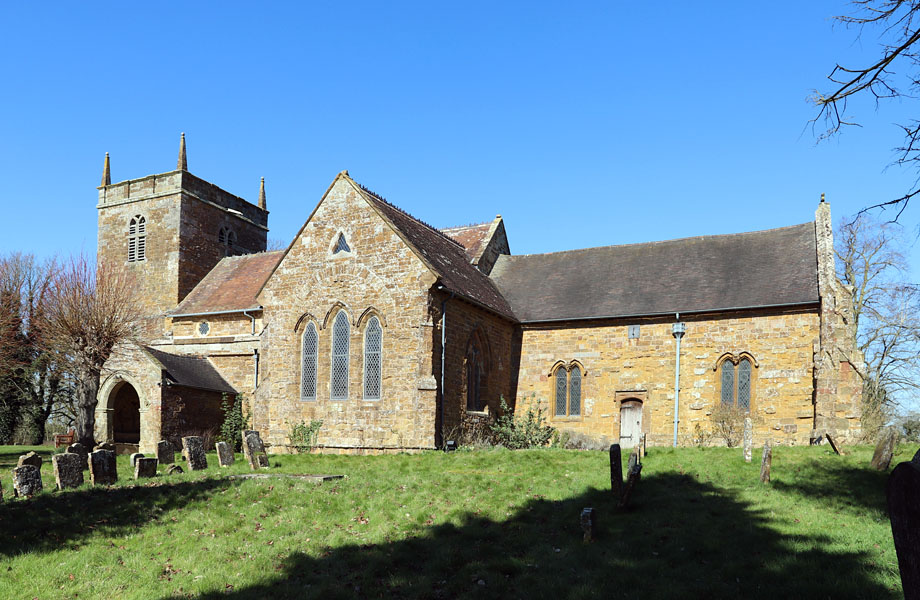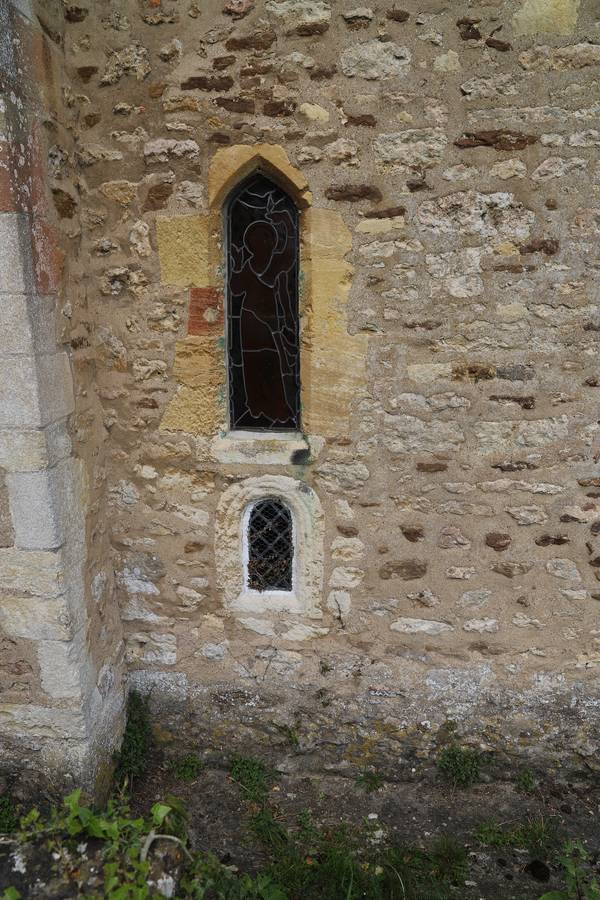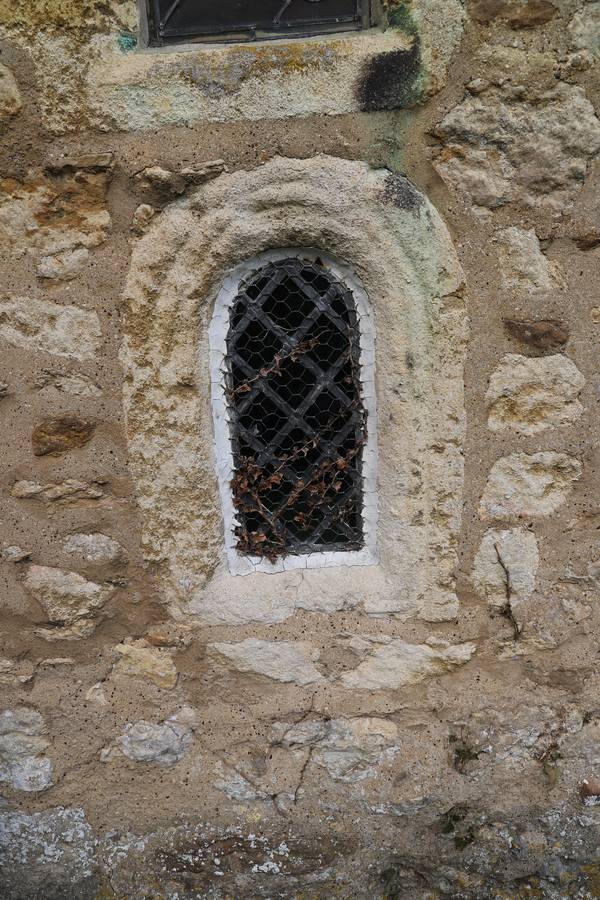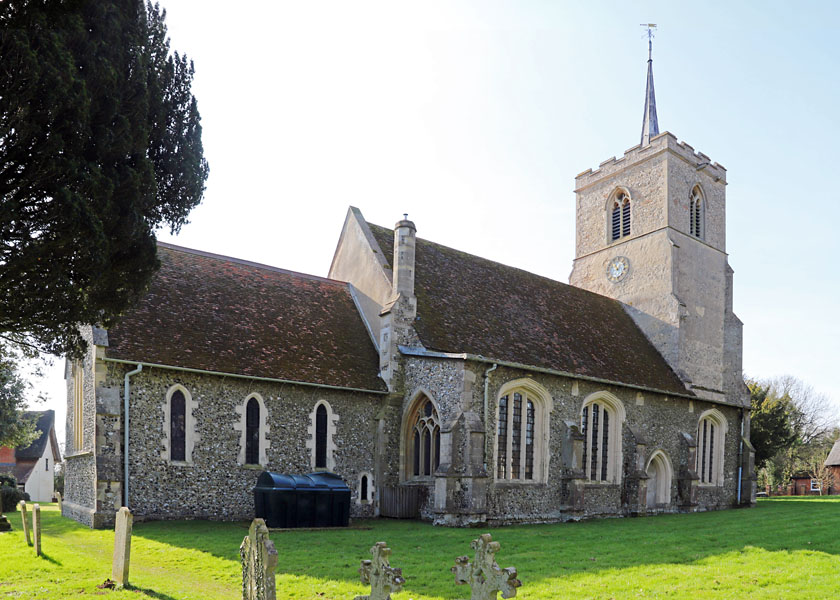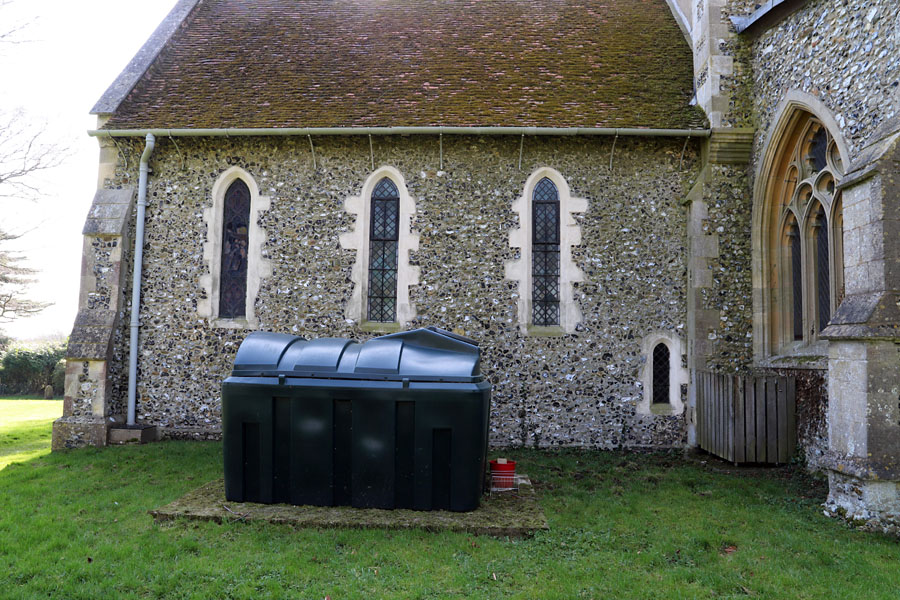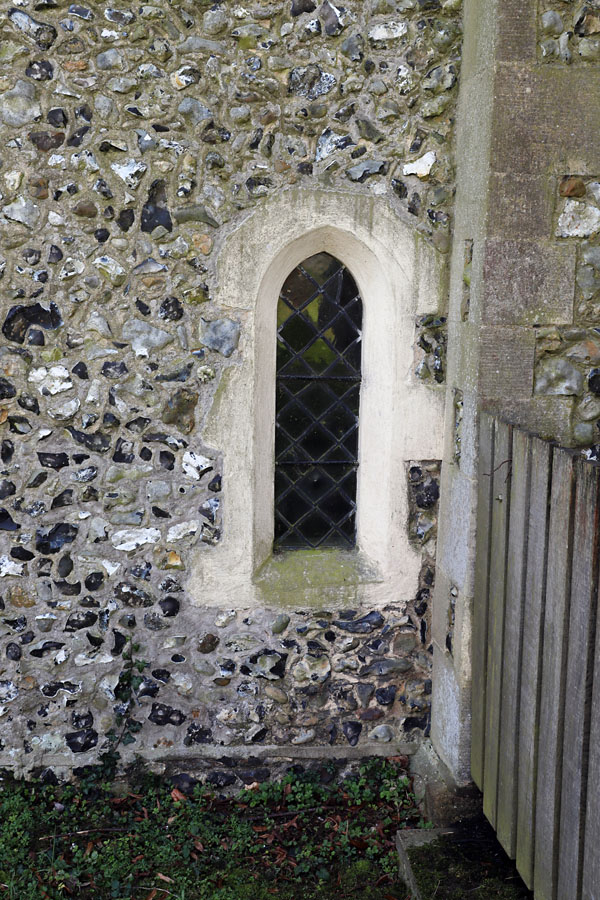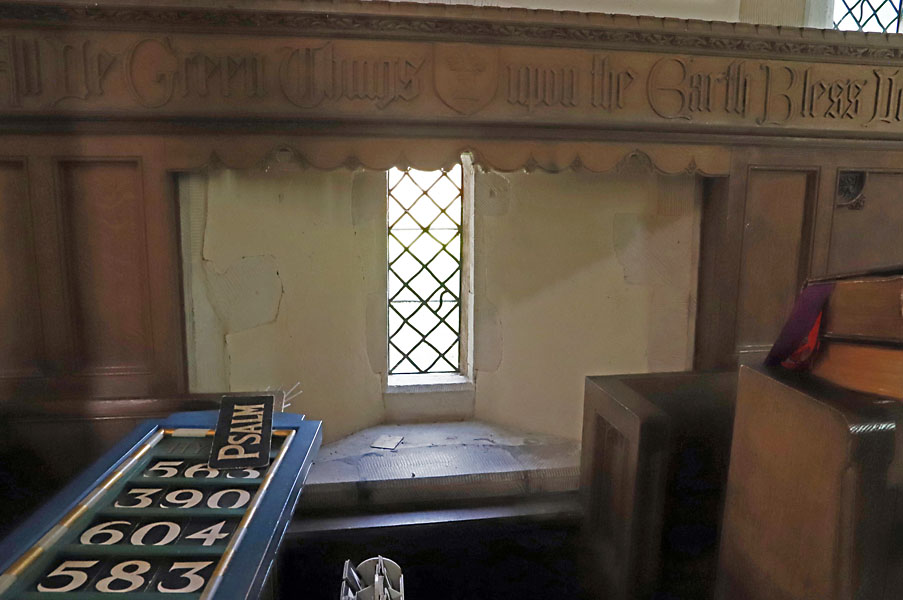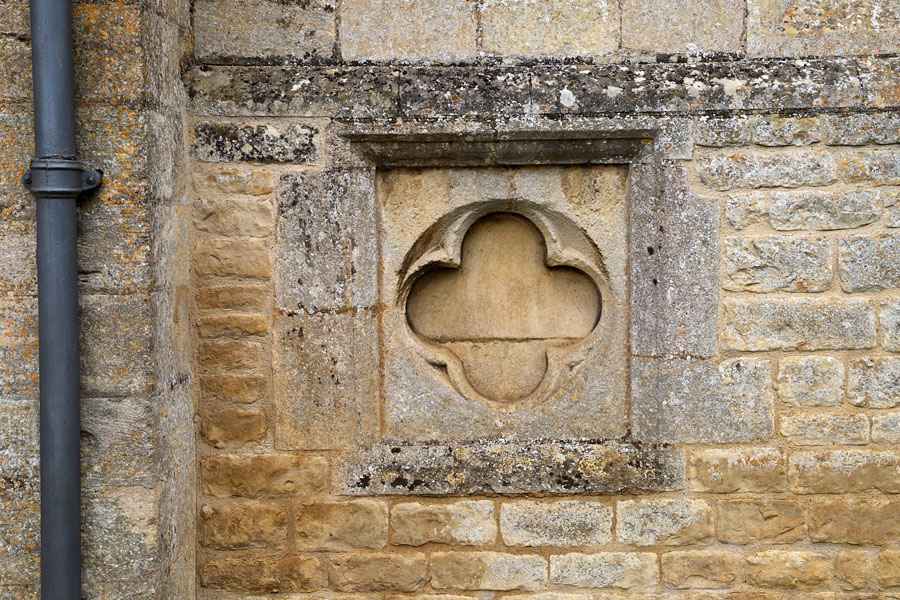
An unusual quatrefoil low side window in St Mary Magdalene, Essendine, Rutland. The church is transitional Norman but its chancel dates from the 13th century.
This later addition may be 14th century.
A quatrefoil low side window in St Mary Magdalene, Essendine, Rutland. The church is transitional Norman but its chancel dates from the 13th century.
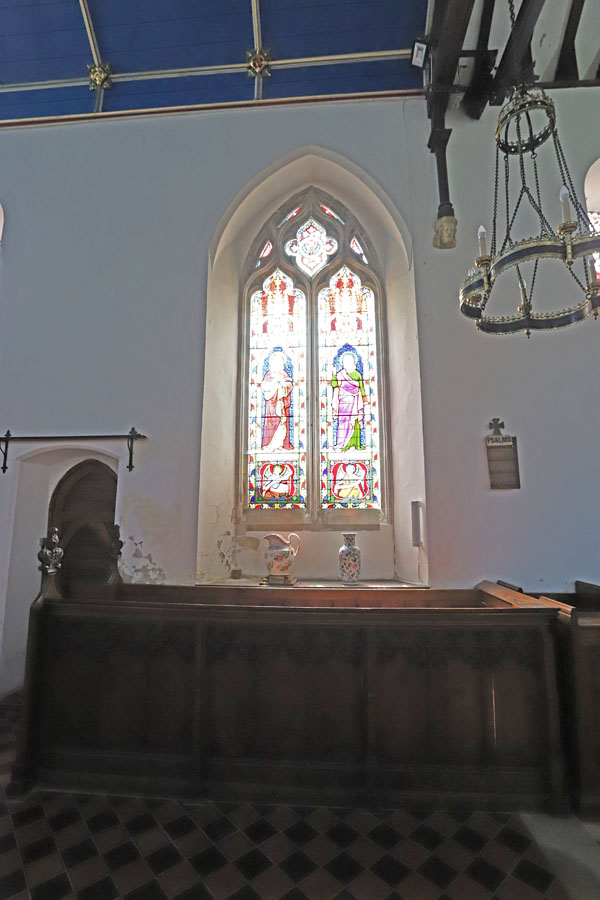
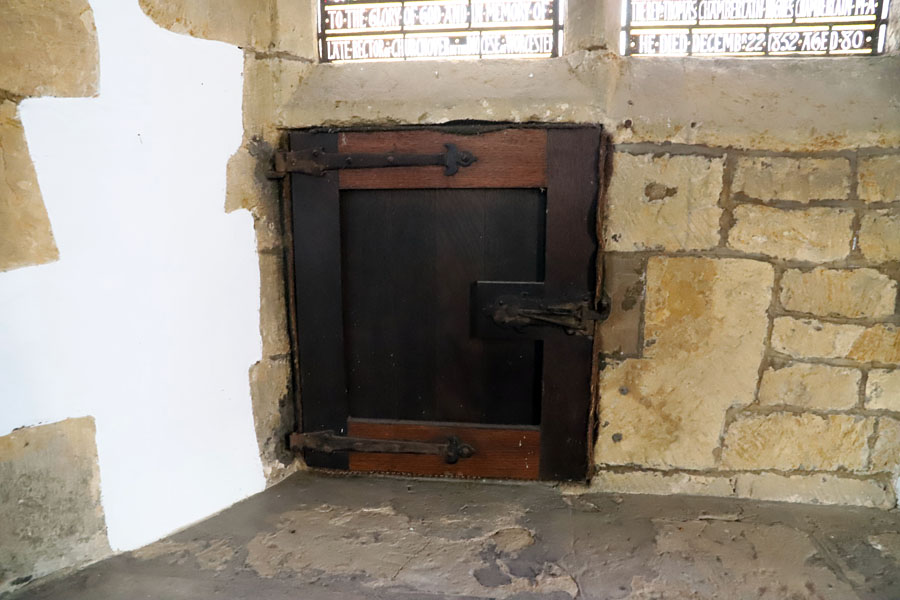
This later addition may be 14th century. It is now blocked and the inside has been converted to a aumbry with modern shutters
It would appear that the term, “low side window” began appearing in the middle of the 19th century as antiquarians grappled with the mystery of why this particular feature of ecclesiastical architecture is so widespread in pre-reformation churches. An early, and possibly the first reference to a low side window (though that exact term was not used) can be found in The Gentleman’s Magazine for March 1839, in a description of the 12th century church of
St Mary the Virgin, Hurley, Berkshire.1
The low side window at St Mary the Virgin, Hurley, Berkshire.
The low side window at St Mary the Virgin, Hurley, Berkshire. Now blocked.
St Mary the Virgin, Hurley, Berkshire. Internal view. The low side window is now entirely obliterated internally, and sits below a later Decorated window which replaced the original Norman window.
The author, signing himself “Plantagenet” writes;
“Under the second window from the east is a shallow square-headed recess, in which is an ogee-headed pierced spandrelled panel. What this was is difficult to say: it is too near the ground to have been a stoup, and is too small for the doorway to a crypt, being only two and twenty inches wide and thirty-four in height. It may, however, have been the window of a crypt, or an opening through which to view and worship from the churchyard the reliques [sic] of some saint immured within the chancel; to which latter opinion we are most inclined, on account of there being also a monumental recess in the interior south wall, corresponding in situation with this exterior recess.”
A can be seen from the photos presented in the slide pack above, the internal recess Plantagenet mentions is no longer apparent at Hurley, but the external opening (now blocked) can still be seen. In 1844, The Archaeological Journal published an article entitled “Low Side Windows”, whose author signed themselves as “I. H. P.”
This article greatly expanded on the subject.2
A few years later the terms, “Lychnoscope”, “Leper Window” or “Confessional Window” began being used, and were very much in use before the more general term, “low side window” was widely adopted. The former were, perhaps, too specific, especially as little evidence to back-up these theories had been advanced, and there were significant objections to them. However, I will generally use the loose term, “low side window” throughout unless a specific reason to discriminate arises (for example where documentary evidence exists to prove a particular use).3
It would first be useful to try to define what a “low side window” is.
LSWs are characterised thus: They are:
- An opening through the wall of the church.
- Small, or generally smaller than adjacent windows.
- Lower than the adjacent windows, and generally low enough for a seated or standing person to look through the opening. Sometimes associated with an internal seat, or having a low ledge to act as a seat.
- Nowadays often blocked by masonry, or glazed. Sometimes LSW are now inside the body of the church having been consumed by the later addition of an aisle, vestry or transept.
- Sometimes provided with an iron bar or bars.
- Sometimes have hooks for hinges in situ; evidence of having had wooden shutters, or which actually still possess wooden shutters.
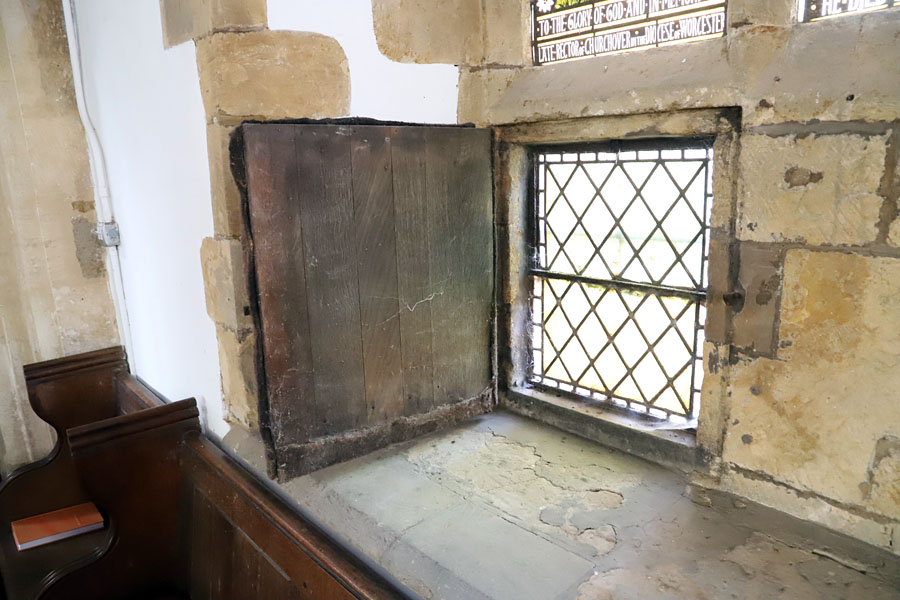
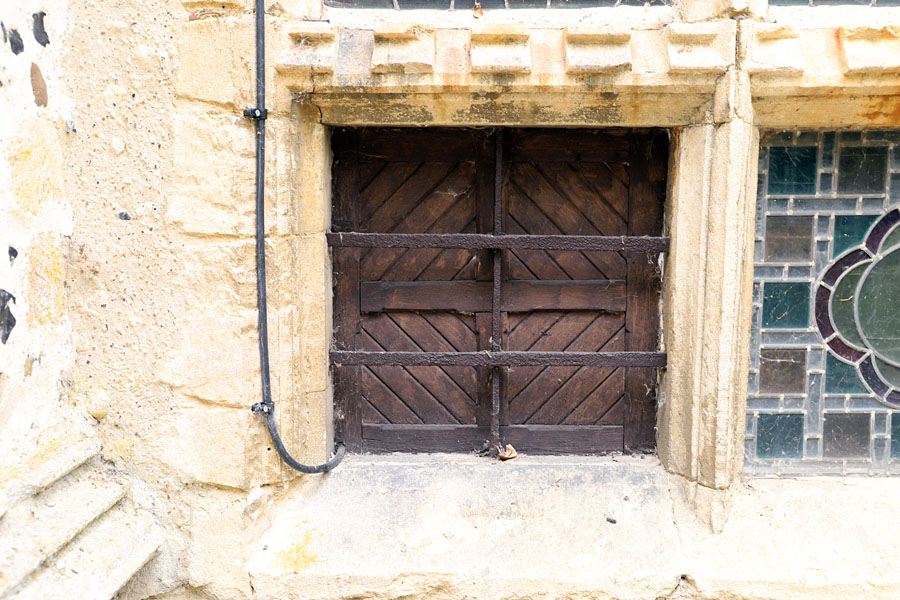
The low side window in the north wall of the chancel at St Mary Magdalene, Wardington, Oxfordshire with its wooden shutter still in situ complete with latch. Note that the shutter can only be opened from the inside. The glazing is modern.
The low side window at St Mary Magdalene, Wardington, Oxon, complete with
its internal shutter and wooden casement.
The term “window” is somewhat misleading, as many of the original openings were thought to have been unglazed, but rather provided with a wooden shutter, whose hinges, or hinge recesses can sometimes still be found, and which could only be opened from inside the church.
4 At some churches the shutters (though clearly not the originals as these would have long since rotted away) are still in situ, such as at St Giles, Aston, Shropshire, St Winifred’s, Branscombe, Devon, The Assumption of the Blessed Virgin Mary, Lillingstone Lovell, Buckinghamshire, All Saints, Shirburn, and
St Mary Magdalene, Wardington,
The low side window in the north wall of the chancel at St Mary Magdalene, Wardington, Oxfordshire with its wooden shutter still in situ complete with latch. Note that the shutter can only be opened from the inside. The glazing is modern.
The low side window in the north wall of the chancel at St Mary Magdalene, Wardington, Oxfordshire, complete with Suffolk latch. The hinges may be original, but the shutter itself seems to have been repaired in the past.
both in Oxfordshire, and
St Mary's, Troston, Suffolk,
The low side window in the south wall of the chancel at St Mary's, Troston, Suffolk. Internal view with its internal shutter still in situ.
The low side window in the south wall of the chancel at St Mary's, Troston, Suffolk. Internal view with shutter still in situ. The shutter open reveals the blocked opening behind and the window bars still in place.
External view. At St Mary's, Troston, Suffolk, the low side window (now blocked with brick and render) was installed below and existing 13th century lancet which is probably original.
to name but a few.
There is also a particularly good example at All Hallows, Great Mitton, Lancashire, which has two shutters in the lower lights of a two-light transomed window. (view on
Google Streetview). At
Holy Trinity, Scoulton,
The low side window in the south wall of the chancel at Holy Trinity, Scoulton, Norfolk. External view of the unglazed opening with its internal shutter and bars still in situ.
The low side window in the south wall of the chancel at Holy Trinity, Scoulton, Norfolk. External view of the unglazed opening with its internal shutter and bars still in situ (shutter open).
The low side window in the south wall of the chancel at Holy Trinity, Scoulton, Norfolk. Internal view of the unglazed opening with its internal shutter and bars still in situ (shutter open).
As the church was locked at the time of visiting, this photograph was taken through the window opposite, hence the reflections of foliage.
and
St Andrew's, Barningham,
The low side window in the south wall of the chancel at St Andrew's, Barningham, Norfolk. External view of the unglazed opening with its internal shutter and bars still in situ. The low side window has been formed by extending an existing 14th century 2-light window lower and the fitting of a transom and mullion. Only the left light has a shutter, and it is not known if both of the lower lights were equipped similarly.
The low side window in the south wall of the chancel at St Andrew's, Barningham, Norfolk. External view of the unglazed opening with its internal shutter and bars still in situ.
Unfortunately the internal view of the shutter is obscurred by a choir stall, and box covering.
The low side window in the south wall of the chancel at St Andrew's, Barningham, Norfolk. External view of the unglazed opening with its internal shutter and bars still in situ.
Unfortunately the internal view of the shutter is obscurred by a choir stall, and box covering.
both in Norfolk, not only are the shutters and bars in situ, but the low side windows remain unglazed.
Thus the term, “opening”, “aperture”, or “low side window” will be used interchangeably.
It should also be noted that some windows which have been previously described as low side windows by virtue of them being lower than other windows in the chancel do not really qualify. For example, at
St Nicholas, Tadmarton, Oxfordshire,
A small lancet in the south wall of the chancel of St Nicholas, Tadmarton, Oxfordshire, described by Frederick Brabant as a low side window. This must be a misattribution as the window is about 1.7m above ground level externally and internally meaning both confessor and penitent would need to have stood on a stool to reach it.
Incidentally, the aperture is now filled with stained glass by A. R. Mowbray & Co. of Oxford to a design by Percy Bacon. Click here to view entry on the main site.
the small lancet on the south west side of the chancel is described by Frederick Brabant as being a low side window.
5 Although lower than the larger window to its east it is not really that low, as its sill is some 1.7m above ground level, both externally and internally.
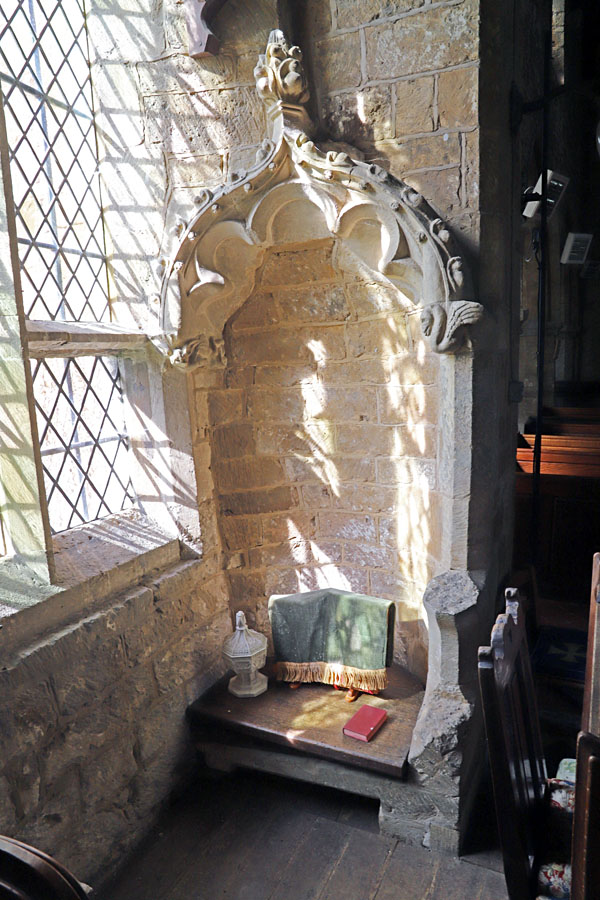
The low side window in the south wall of the chancel at St Giles, Wigginton, Oxfordshire with its internal seat under an ornate ogie canopy with accompanying animal sculptures.
St Giles, Wigginton, Oxfordshire. Inside, the
low side
window has been provided with an
elaborate
canopied seat.
The great majority of LSWs are found on the south side of the chancel of pre-reformation churches, less commonly in the north wall, occasionally on both sides, and usually close to, and just east of the chancel arch, or the intersection of the nave and chancel where an arch does not exist. Some windows were associated with monastic establishments (as at Hurley, Berkshire), but a great many of these are likely to have been destroyed at the reformation.
6 In relatively rare cases similar low openings can be seen in the east wall of a chancel, in chantry chapels, or in the nave. At St Mary’s, Melton Mowbray, for example, some openings in the wall of the west porch are said to be LSWs, though this may be a misattribution. Occasionally they can be found in the wall of a side chapel such as at St Mary’s, Barton-on-Humber, Lincolnshire.
7
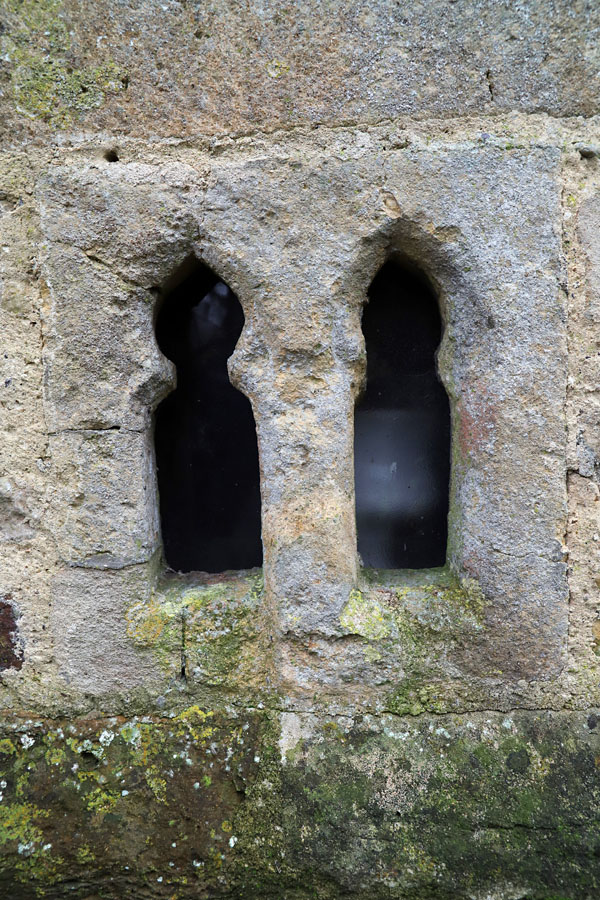
At
St Mary the Virgin, Weekley, Northamptonshire,
The low side window at St Mary the Virgin, Weekley, Northamptonshire. This window is in the south chapel at the end of the south aisle, so not in the usual position. However, it may have been moved from the earlier chancel when the aisle was extended to create the chapel.
The low side window at St Mary the Virgin, Weekley, Northamptonshire. At the time this image was taken, the window was partially hidden by a bush.
there is a curious and rather tiny pair of cusped lancets carved from a single block of stone, but this is inserted into the south wall of the south chapel. It is possible that this was originally in the chancel wall, and only transferred to the chapel when the south aisle was extended beyond the west end of the chancel. Some low side windows have been subsumed into the body of the church by later (sometimes modern) additions. One such example occurs at
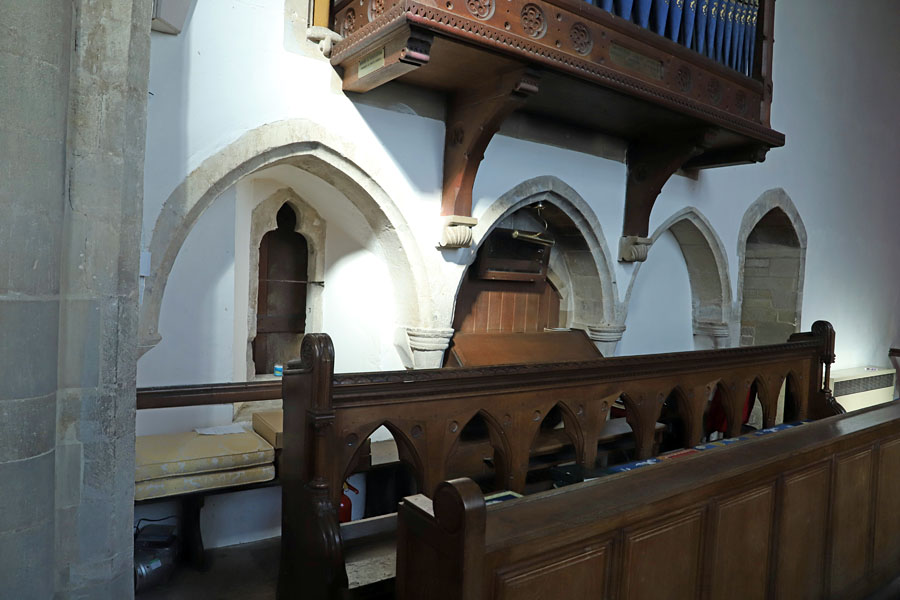
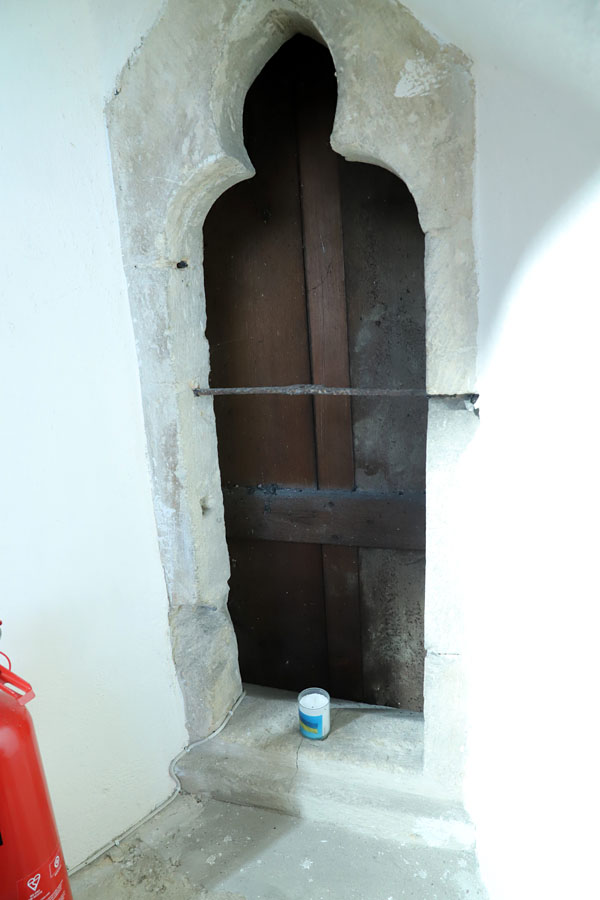
St Mary the Virgin, Woodford, Northamptonshire.
St Mary the Virgin, Woodford, Northamptonshire. The low side window was cut into the first bay of a three-bay blind arcade on the north wall of the chancel, the bay closest to the chancel arch. In the 19th century an organ chamber was built against this wall, but the opening retained.
St Mary the Virgin, Woodford, Northamptonshire. The low side window, now internal to the church, retains a vestige of the iron bars with which it was once endowed. The wooden panel behind is part of the organ case.
Here a small ogee-headed lancet was cut into the first of a three-bay blind arched in the north wall of the chancel. In the 19th century an organ chanmber was added externally to this wall, but the opening retained. At
St Nicholas's, Napton, WarwickshireSt Nicholas, Napton, Warwickshire. A low side window in the south west corner of the chancel, and close to the chancel arch looks into a south transept.
St Nicholas, Napton, Warwickshire. View from the south transept.
St Nicholas, Napton, Warwickshire. The south transept straddles the nave and chancel.
a low side window at the south west corner of the chancel opens into a south transept which straddles the junction of nave and chancel, and which was clearly added after the chancel was built. These rarer, non-conformant examples will be taken individually, rather than lumped with the majority.
Bond asserts that LSWs occur in every period from Norman (e.g.
St Lawrence, North Hinksey, Oxon.
St Lawrence, North Hinksey, Oxfordshire. Possibly a very early 12th century low side window.
St Lawrence, North Hinksey, Oxfordshire. Possibly a very early 12th century low side window.
), through the 13th and 14th centuries, the great majority dating to the latter.8 However, dating without specific written accounts is fraught with inaccuracies. Just because a LSW appears to be of the 13th or 14th centuries because it mimics similar windows of known date in the chancel wall does not mean it actually is of that date. It might be that a later window was constructed in a similar style to maintain visual harmony. Some however, are rather easier to date. For example, at
St Mary’s, Albury, Hertfordshire,
St Mary's, Albury, Hertfordshire. The low side window at the western end of the north wall of the cahancel is identical to the other (larger) Early English lancets, and was likely installed at the same time. The chancel was rebuilt in 1360.
St Mary's, Albury, Hertfordshire.
Low side window in the north wall of the chancel; St Mary's, Albury, Hertfordshire.
Internal view of the low side window in the north wall of the chancel; St Mary's, Albury, Hertfordshire.
the low side window at the western end on the north side of the chancel is identical in style (though smaller) to the three lancets to its east, which would suggest that it was installed as part of the chancel rebuild. An Inventory of the Historical Monuments in Hertfordshire (1910) dates the rebuilding of the original 13th century chancel to circa 1360.9
LSWs occur all over England and Wales, and a good proportion of pre-reformation churches had, or have them. Bond enumerates the work carried out in the 19th century by others;
10
“In Sussex, Mr P. M. Johnston found that out of 315 churches about one-half can be proved to have had low side windows; and that in the 145 ancient churches of Surrey the proportion was about the same. The Rev. J. F. Hodgson found 25 of these windows in 47 ancient churches in Durham. In Warwickshire, Mr F. T. S. Houghton found that in 143 churches having ancient chancels, 76 have or had them. In Northamptonshire, Mr C. A. Markham found 148 low side windows. On the other hand, the Rev. J. C. Cox records only 9 examples in 130 Derbyshire churches. In Shropshire, Mr Cranage gives a list of about 130 mediaeval chancels, and of 36 low side windows, of which 30 are placed in a chancel. In Worcestershire there are about 130 churches with mediaeval chancels; of these only 9 have low side windows. In different districts, therefore, the use varied greatly. Taking the whole country over, however, the number must be very large.”
With the widespread adoption of LSWs, it would be inconceivable if there was not a common purpose for them, but, as Bond points out, it is astonishing that there appear to be no specific mention of them in medieval manuscripts, papal bulls, episcopal constitutions, or parish church orders. This gave rise to fertile grounds for conjecture, and still presents a minefield even with the ability to search out books, documents, photos etc. using the power of the internet, all from the comfort of one’s own study. The distribution of LSWs does not appear to be uniform across the country, and some enquiry into this distribution and the reason for it merits consideration. However, this is beyond the scope of this work at present.
Various attempts have been made to classify the windows by reference to their size, shape, disposition, whether transomed, or of single or multi-light, new apertures or extensions of existing windows etc. These classifications only seem to assist a hierarchical approach, but may serve as a means of dating low side windows, especially where these appear to be later additions to earlier windows as in the case of the many LSWs formed by the addition of a transom.11 However, reviewing the multitude of differences in these physical attributes, and their disposition results in the problem of assigning a single purpose for all the LSWs we find, as each window is liable to fail one or more of the theories as to why they exist, but it may assist in dating them. Furthermore, it will be obvious that physical similarities between windows (other than being low down) may have little bearing on the reason for their installation, or the uses to which they were put. After reviewing the many theories proposed for the existence of low side windows, this essay will explore the most plausible in greater detail, and, with the help of a new theory which to date has not been aired by any previous writer on this thorny subject, propose one which may fully explain the vast majority of them.
Back to Contents