
The Location of Low Side Windows in Relation to Roman Liturgical Practice of the Middle Ages.
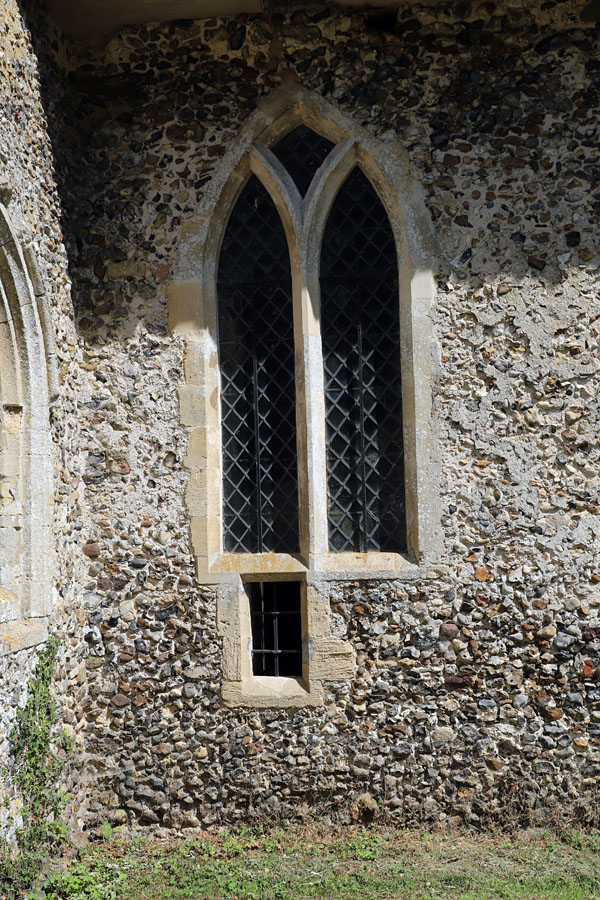
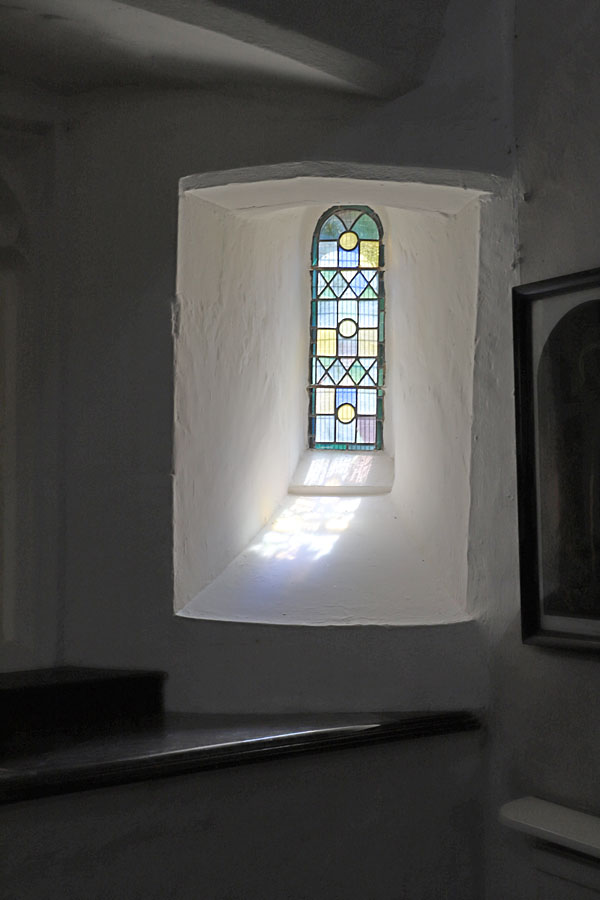
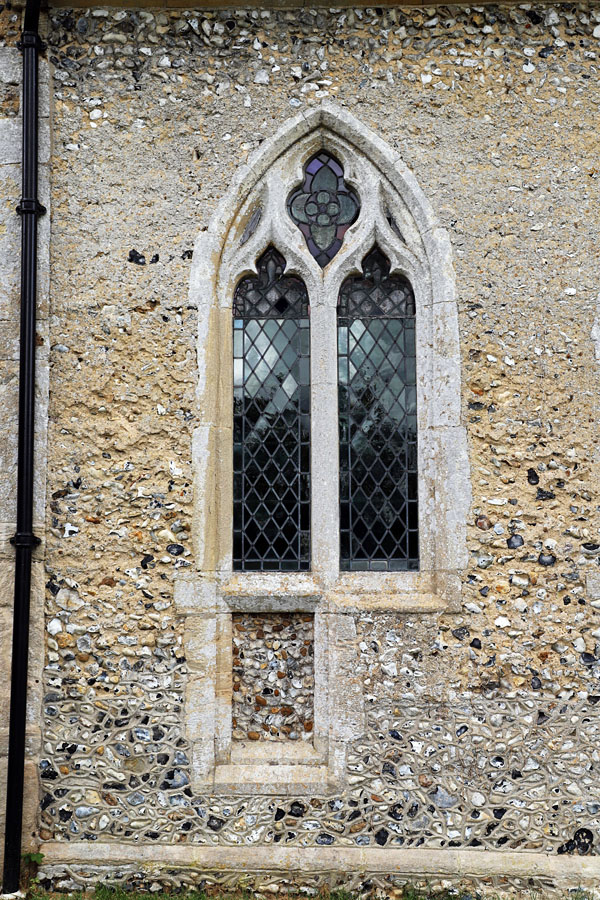
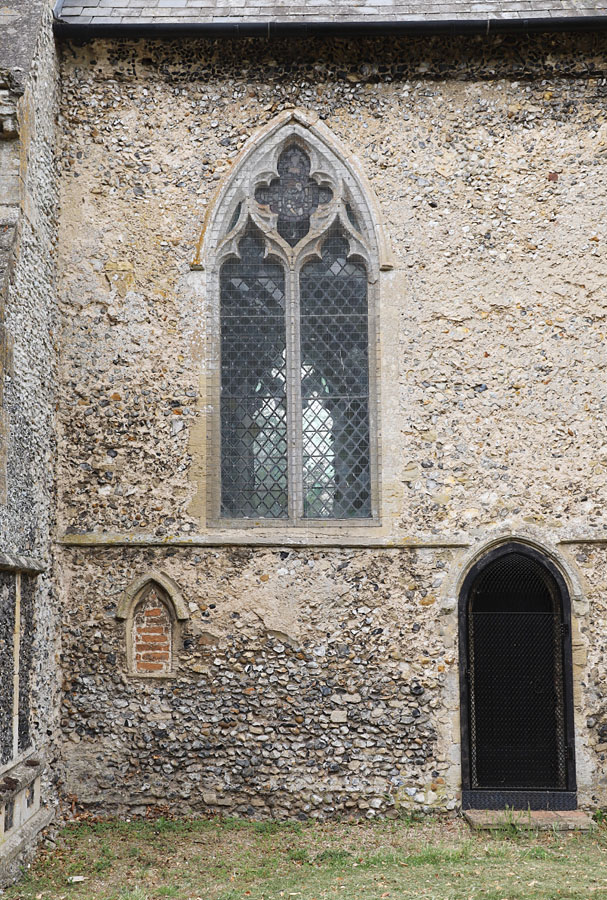
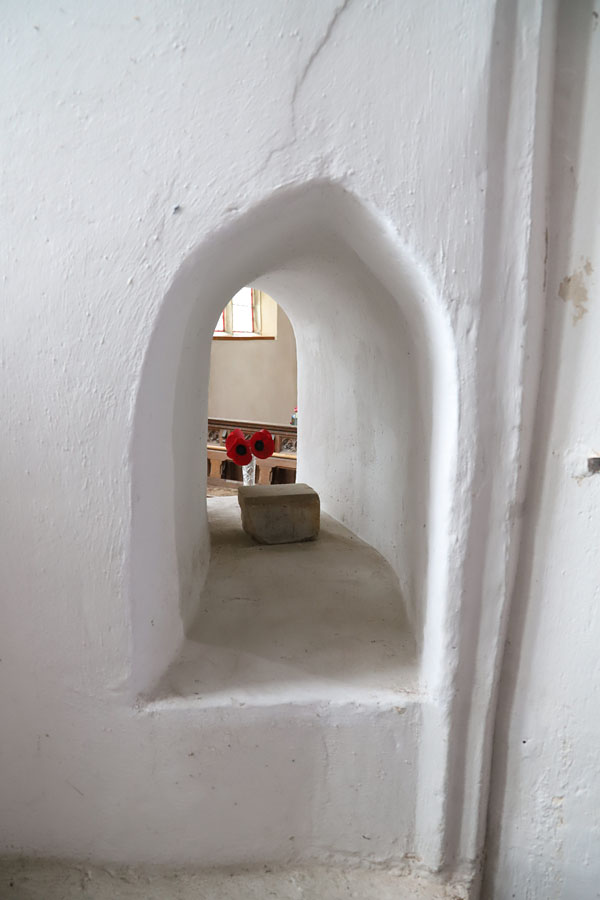
Low side window in the south wall of the chancel. Holy Trinity Church, Scoulton, Norfolk.
All of the earlier writers on the subject of low side windows pointed out that their usual location was at the western end of the chancel. However, as far as can be established, few seem to have enquired as to why that is the case. One notable exception is Philip Mainwaring Johnston, who discusses with some authority from correspondence with some well-regarded ecclesiologists. In his 1898/99 articles on Low Side Windows of Sussex Churches he states:
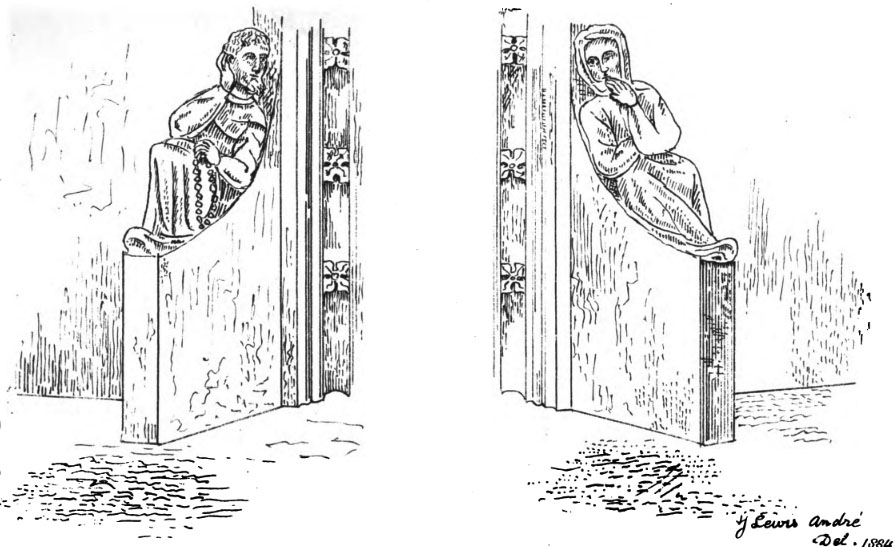
Mr Johnston goes on to suggest that hagioscopes or squints, tunnelled between the nave and the chancel could also have been used for auricular confession. Quoting Mr J. L. André, Mr Johnston provides further evidence that this practice was standard:
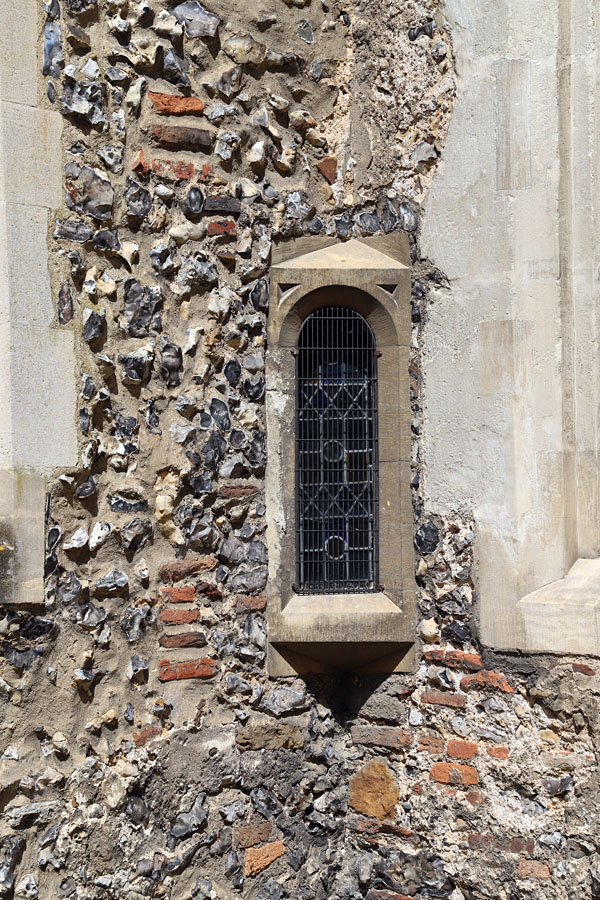
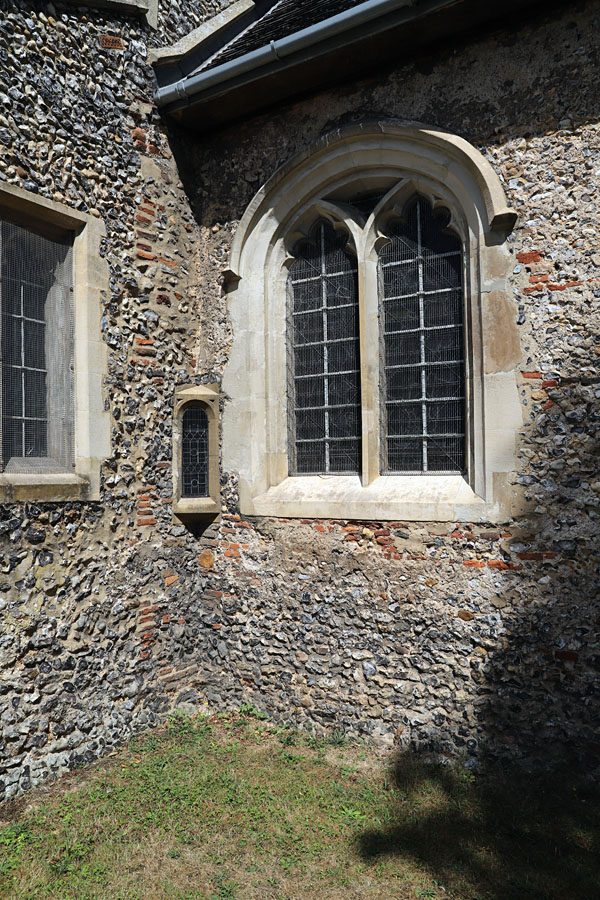
Externally, except perhaps for the curious window shoe-horned into the fabric of the building at the junction of the chancel and east end of the south aisle , St Leonard's Church in Sandridge, Hertfordshire is unremarkable.
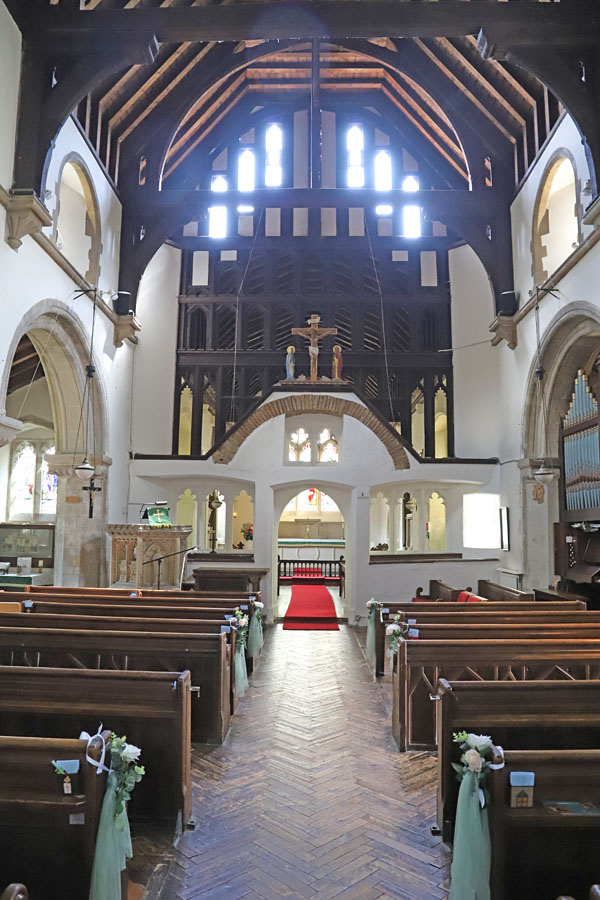
St Leonard's, Sandridge, Hertfordshire. Late 14th century stone rood screen. The curious "hagioscope" or squint cut at an angle at the junction of the chancel and south aisle can be seen on the right. Click on the image to start a slide show which includes pictures of the recumbant figures and the low side window.
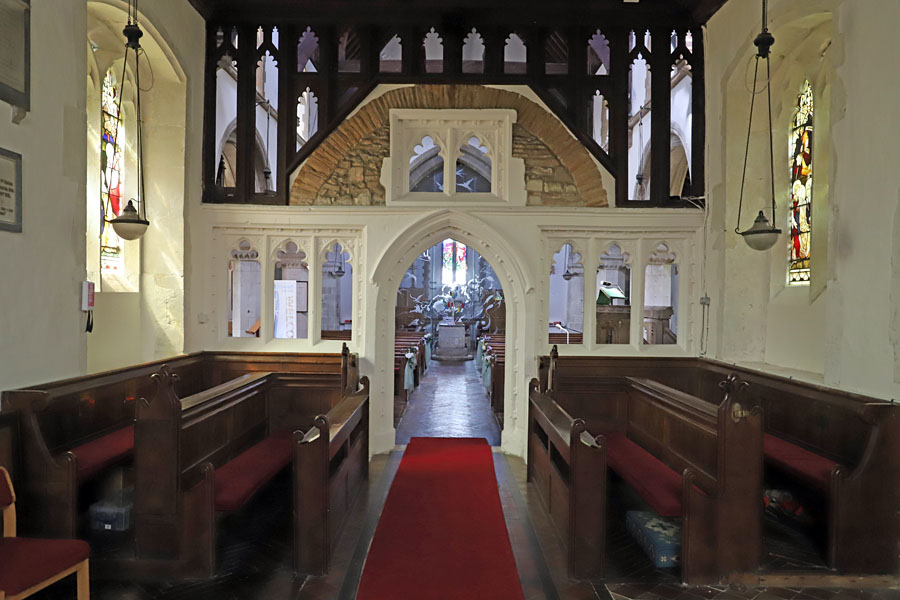
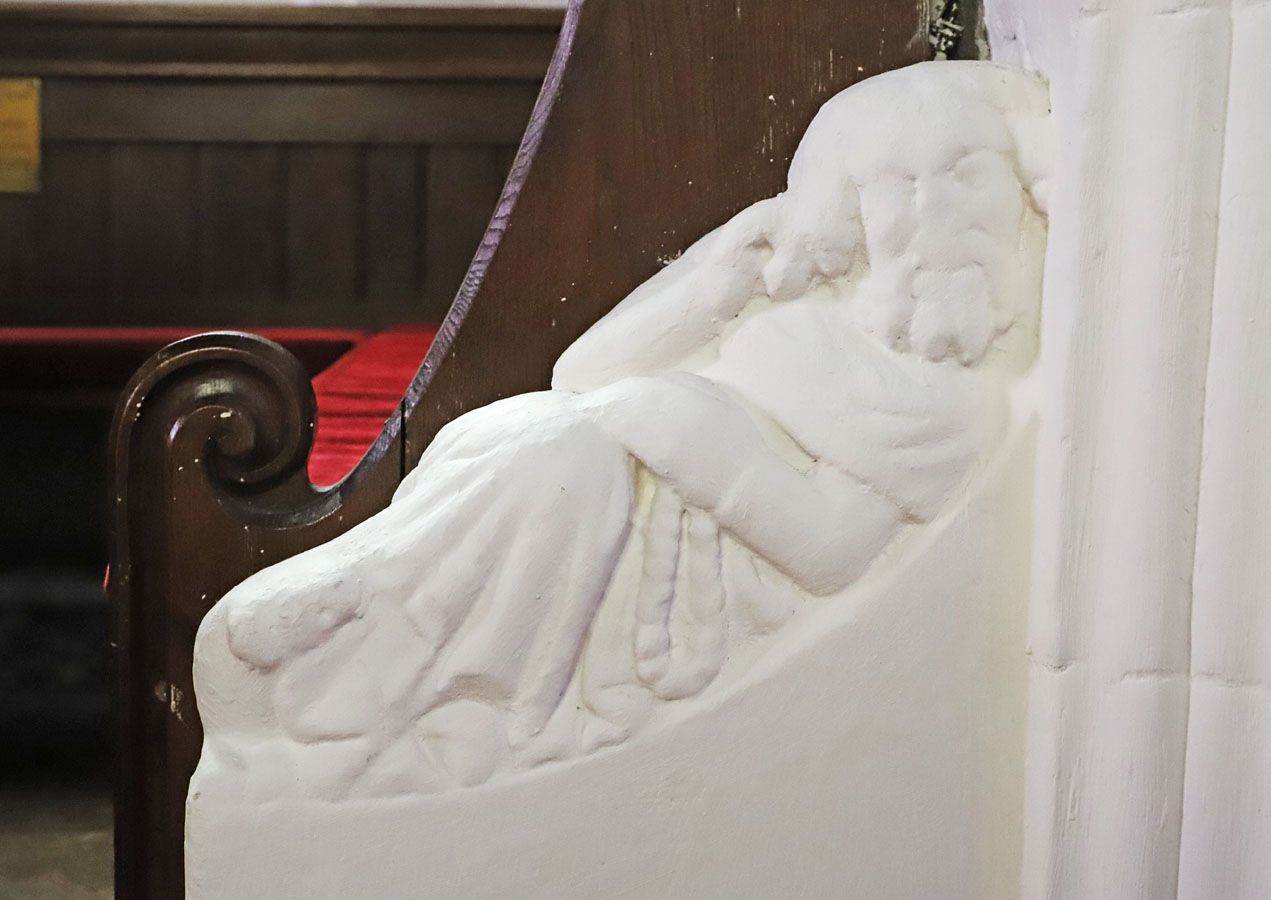
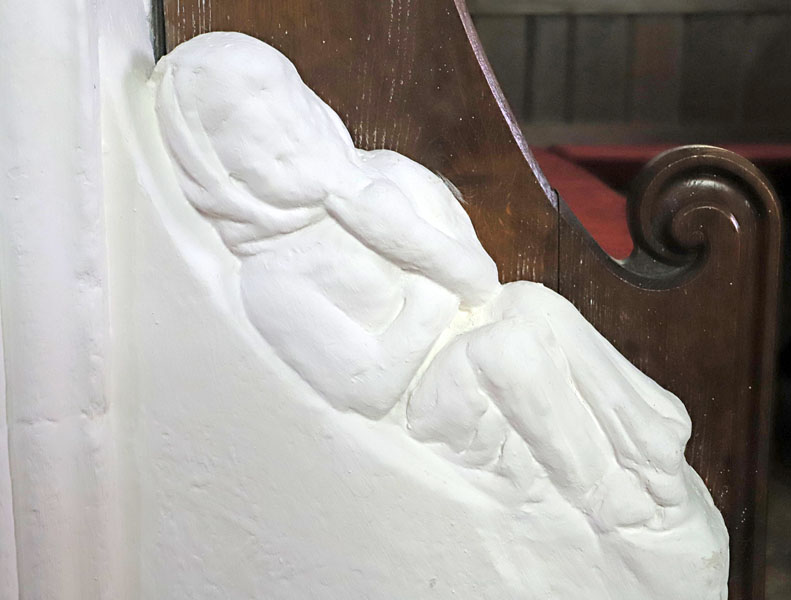
Internally, however, it is the late 14th century stone chancel screen which catches the eye. This curious structure with its thick walls, wide central door and pair of triplet ogee headed lancets either side is said to be unique in Hertfordshire. Above the doorway are another pair of lights, shorter but as well crafted. These are surmounted with a blind arch constructed from Roman bricks. Above this arch there is an elaborate heavy traceried wooden screen which reaches to the roof. The latter is modern; the wall above the screen was originally filled in.3 Just inside the doorway to the chancel there are two curious recumbent figures carved into stone bench-ends. (Click on the image left to start a slide show). These seem to depict, on the south side, a bearded monk or friar, and on the north side a woman. There is some speculation that these figures are confessor and penitent. The church was heavily restored by William White in 1886-7.
The curious window mentioned above is installed at an angle of 45 degree, and has a wide internal splay which opens into the nave. Quite what this window was for is a mystery, but it was clearly meant for someone to be able to look into or out of the church. But at what? Externally the window is a little too high to qualify as a low side window, however, the ground level was significantly higher in the past as can be seen in another image on the Hertfordshire Genealogy website (the churchyard was levelled in 1888).6 It is possible that a screen of stone or wood was in place prior to the building of the current one, and was further west, so that the aperture opened into the chancel. Were the sculptures which appear to represent confession added as an apology for having made the side window look into the nave rather than the chancel? It is hard to say. Some suggest the brick arch was part of the original 12th century edifice (see sign board outside the church). These features at St Leonard's, Sandridge, are discussed further in the entry for the Percy Bacon window in the church.
"Much might be written of the many classes of openings to be found in the walls of our ancient churches, and of some of which the original purpose, or purposes, can now only be guessed at. The commonest and most familiar of these classes is the hagioscope, or squint, often found side by side, and, as I have instanced above, sometimes in actual combination with the low side window. Is it not, perhaps, too hastily assumed that these singular piercings through walls and piers, because they usually command a view of a high or side altar, were therefore made for that purpose alone? It is, I think, quite possible in many instances that these so-called hagioscopes were used as confessionals. That they should be so pierced as to make the altar visible does not militate against such a possibility, but rather adds weight to it; while, as can easily be demonstrated, the peculiar resonance of these miniature tunnels make a whisper at one end distinctly audible at the other."

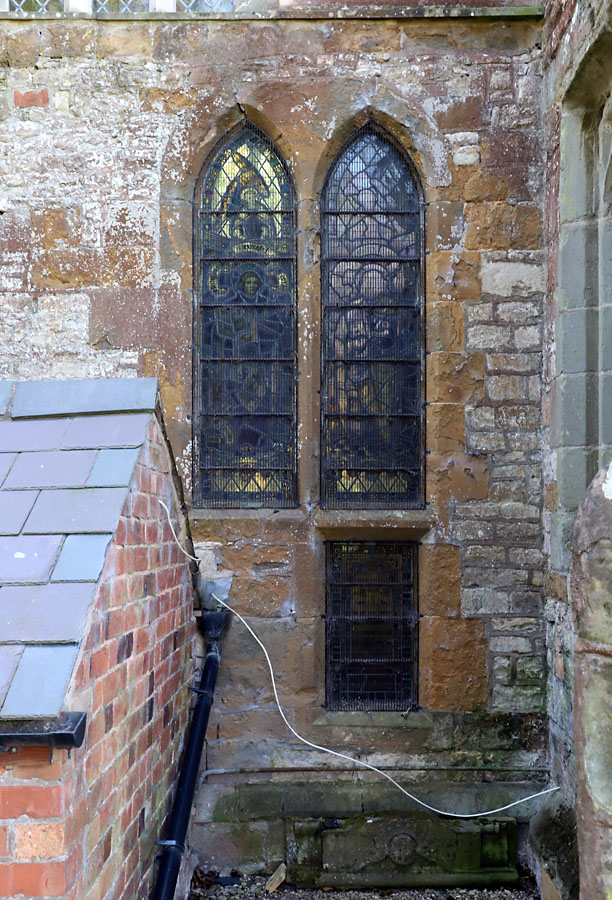
Low side window in the north wall of the chancel.
All Saints Church, Ladbroke, Warwickshire.
F. T. S. Houghton in his comprehensive early 20th century survey of extant low side windows in Warwickshire churches takes some pains to classify the physical configuration of the windows using the following criteria: Independent openings, low-silled single lancets, low-silled two or three-light windows, and two-light windows where only one of the lights was modified (which he termed "Ladbroke type").4 These he sub-categorised according to their shape, whether transomed or not transomed. In itself, classification of windows on the basis of their dimensions or physical characteristics is not especially useful, other than perhaps for dating purposes. Of significantly greater importance when considering the primary function of a low side window, is their position in the church. This is especially important where an extant (pre-existing) chancel window has been modified to create a low opening.
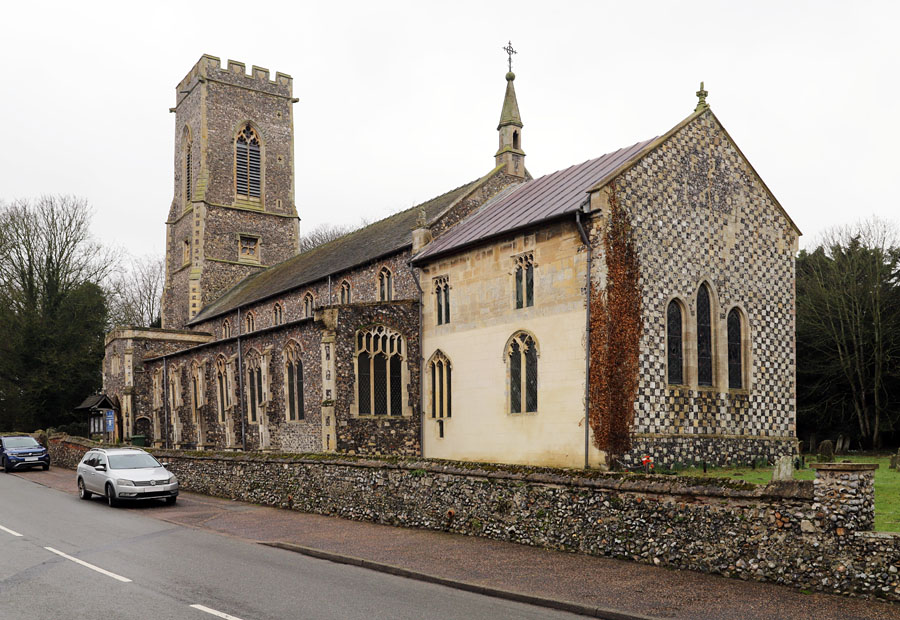
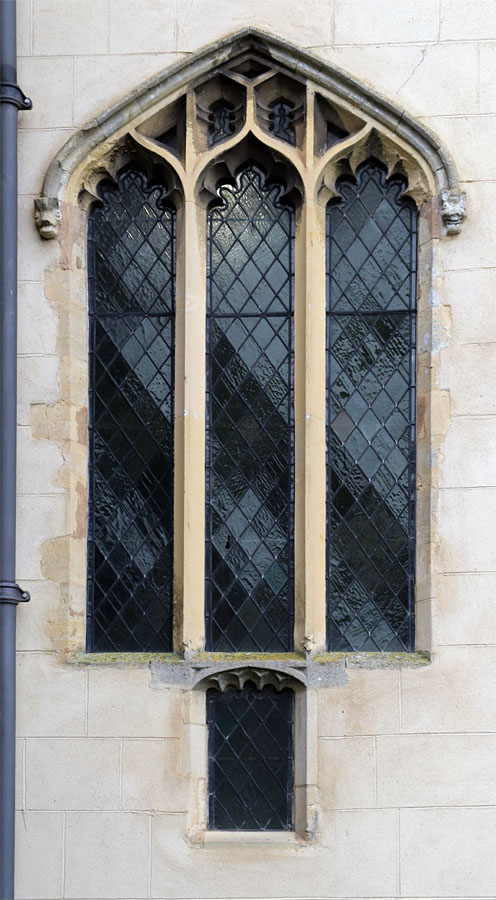
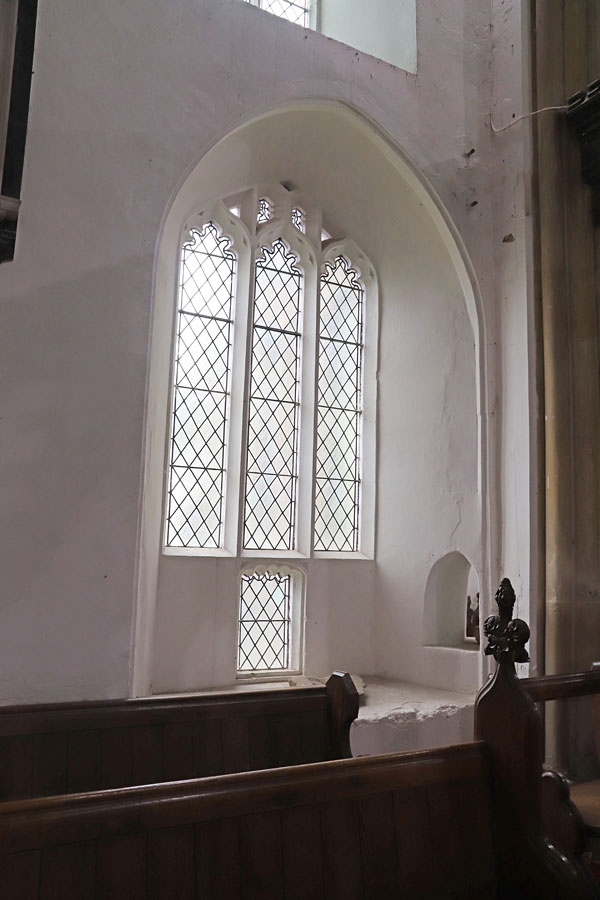
There are a number of examples which provide further evidence to support the theory that low side windows were used primarily for confession, and that it was of paramount importance to place the window as close as possible to the "normal" location for hearing that confession in the medieval church (i.e. at the junction of the nave and chancel).5 Where a pre-existing window was close to the western end of the chancel, whether in the north or south wall, these will be seen to have been lowered to form a low side window. Many two-light windows which were deemed close enough to the western end of the chancel to meet the requirements of the liturgical practice for confession were lowered by the addition of a transom and mullion such as at St Mary's Ardley, Oxfordshire and St Andrew's, Collyweston, Northamptonshire. In some instances only one of the lights of a two-light window was lowered. In these cases it is almost always the westernmost light that is modified: e.g. All Saints, Ladbroke, Warwickshire, St Mary Magdalene Wardington, Oxfordshire, St Andrew's, Barton Bendish, Norfolk, and Holy Trinity, Scoulton, Norfolk., to mention just a few.FN1 A variation of this methodology can be seen at St Giles, Wigginton, Oxfordshire. Here the whole of the two light windows in both the north and south walls of the chancel is lower than the other windows, and in both cases the westernmost light has been fitted with a transom to form a low square opening suitable for the placement of a wooden shutter.
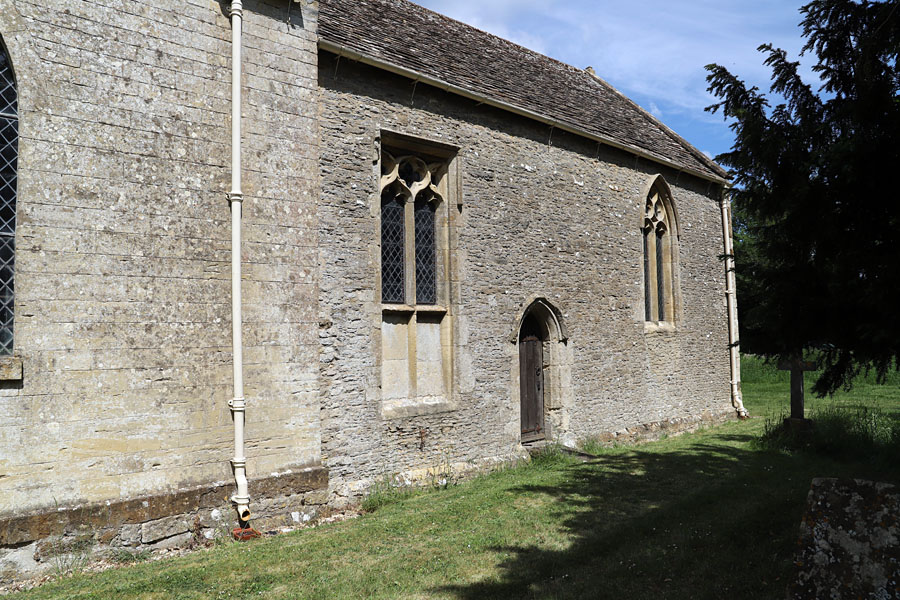
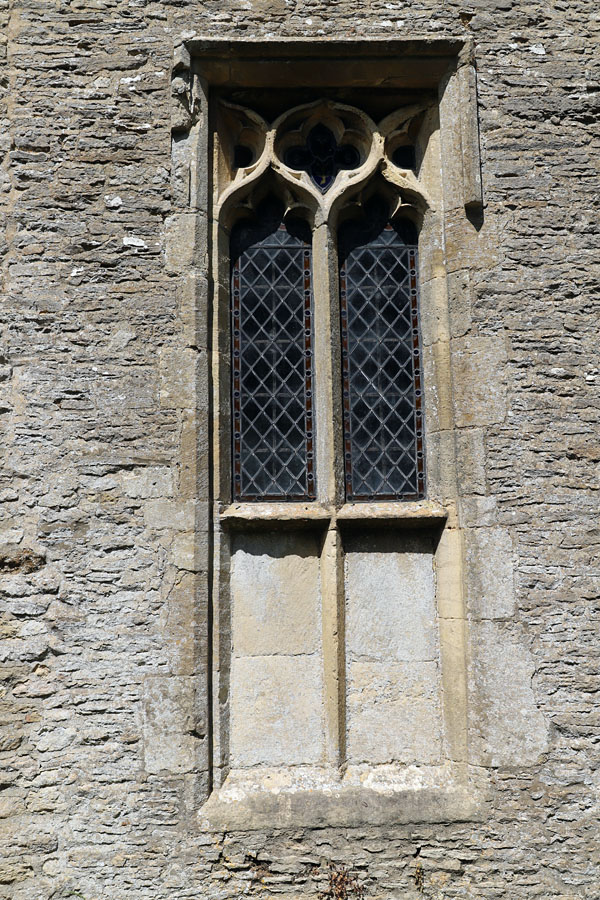
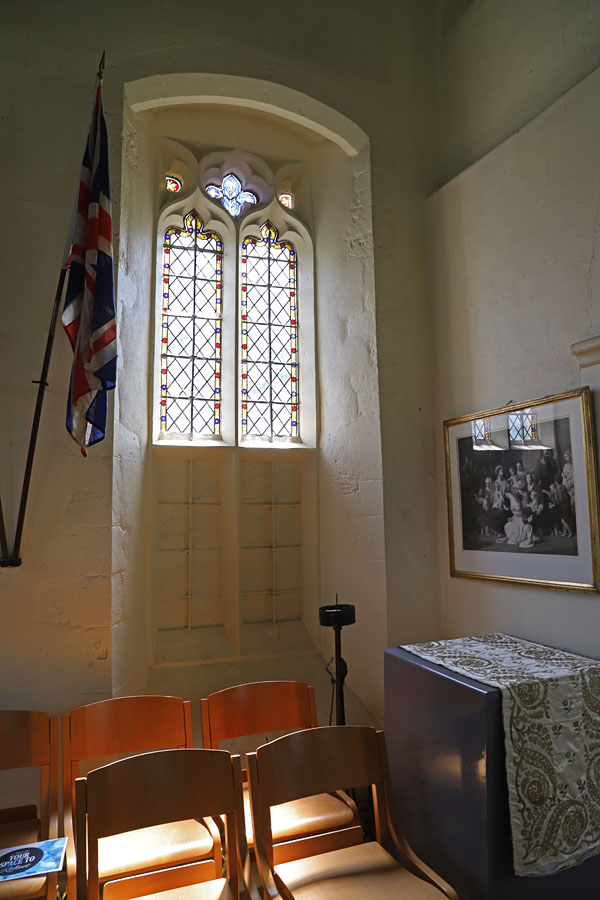
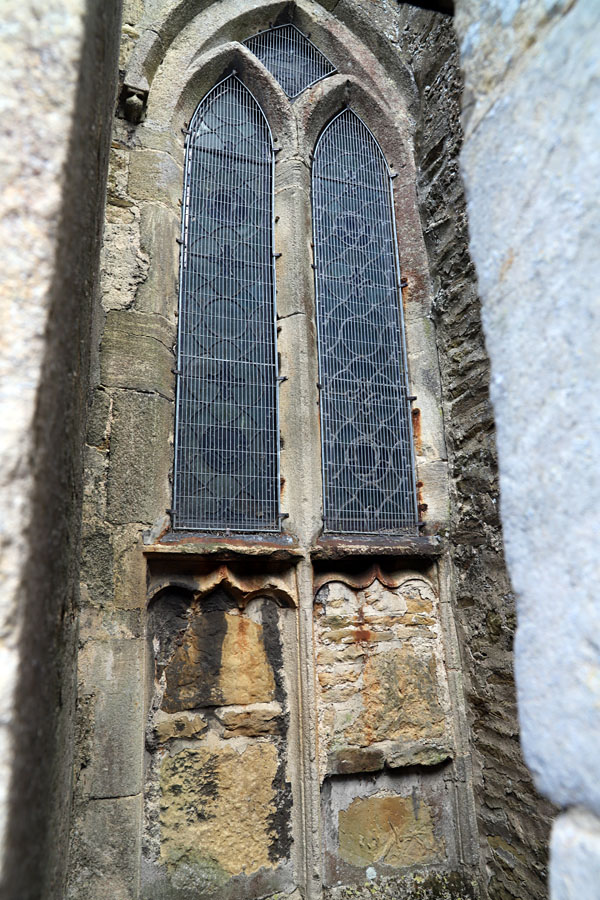
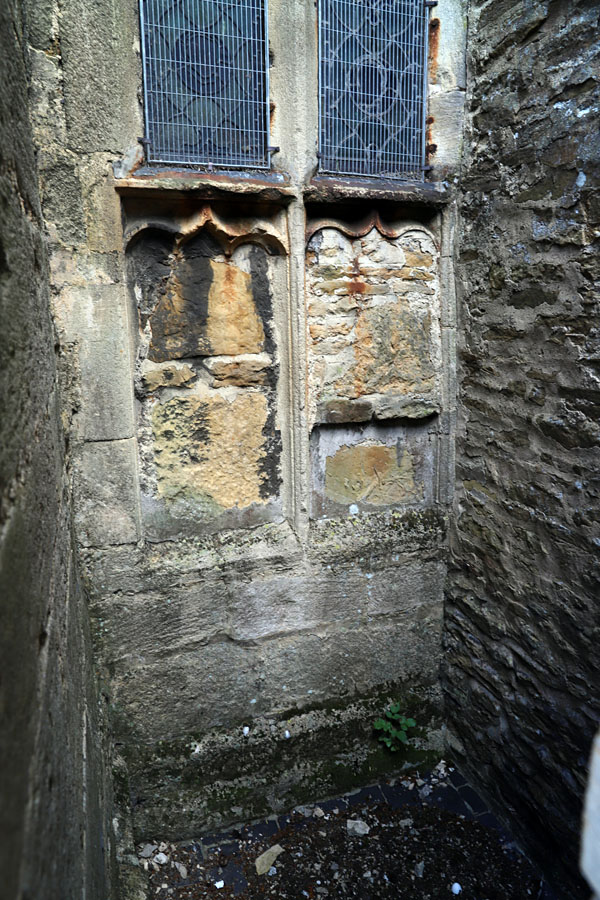
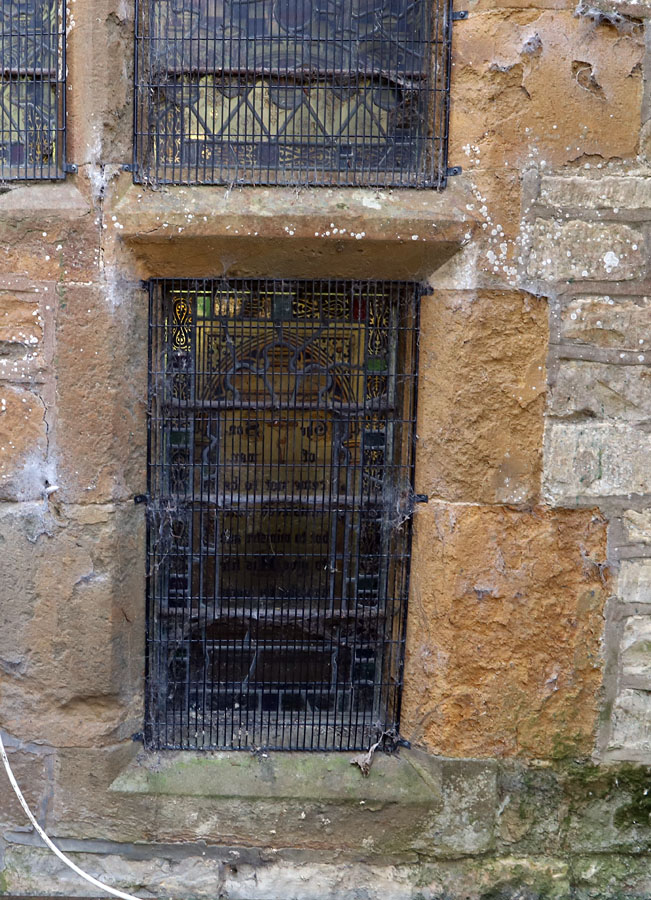
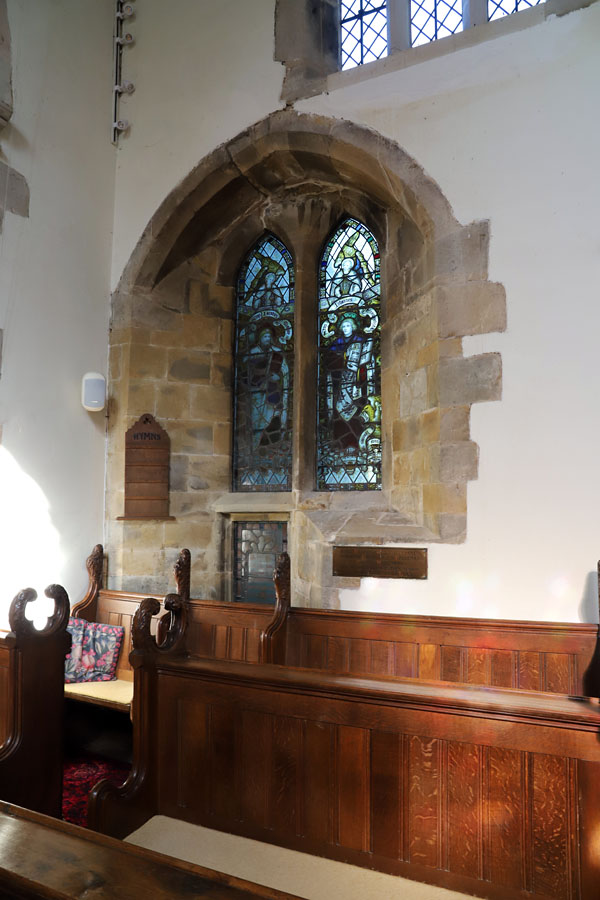
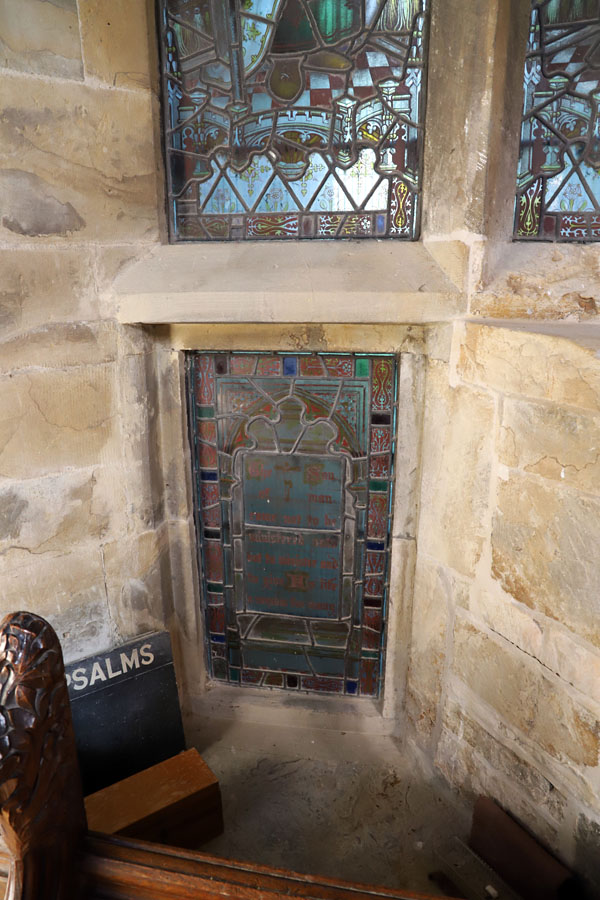
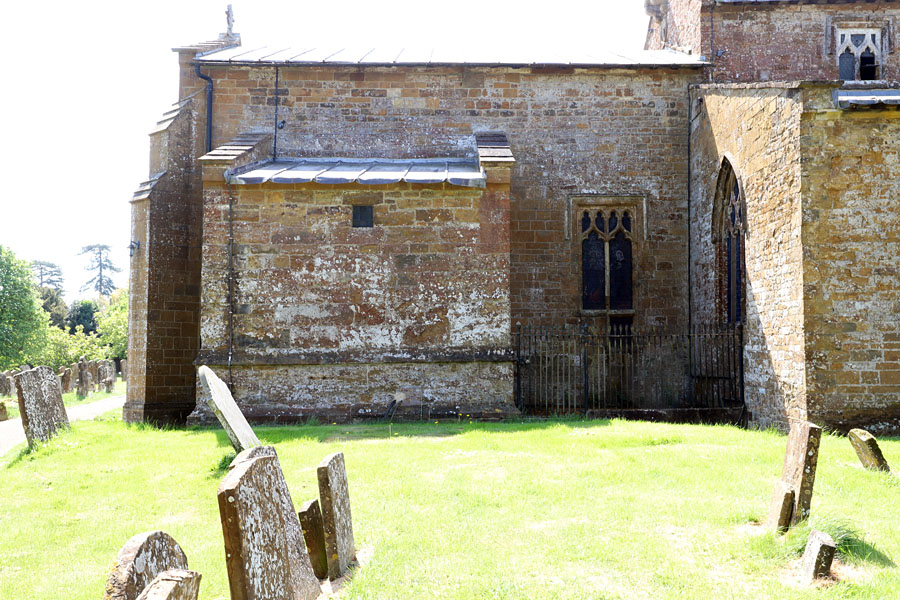
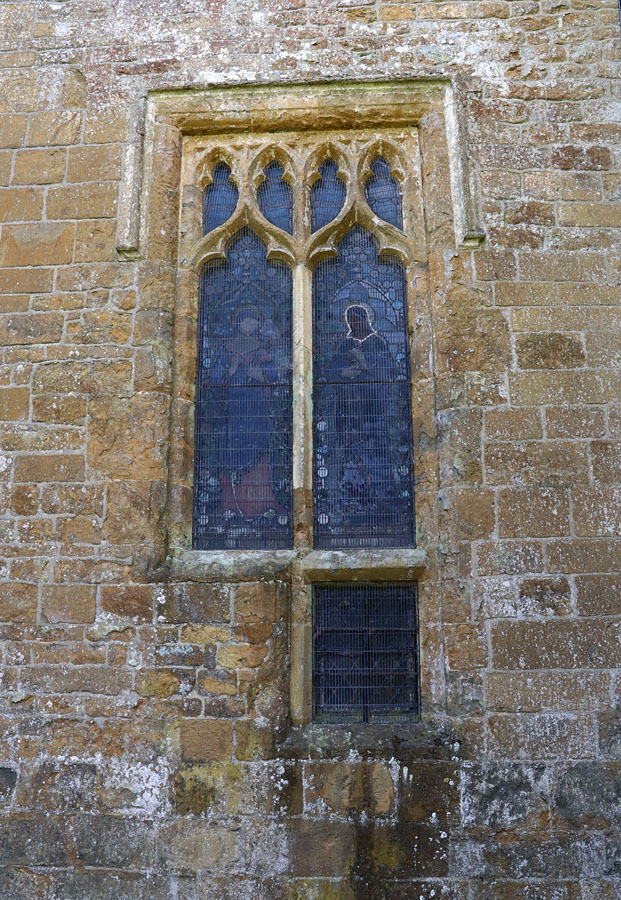
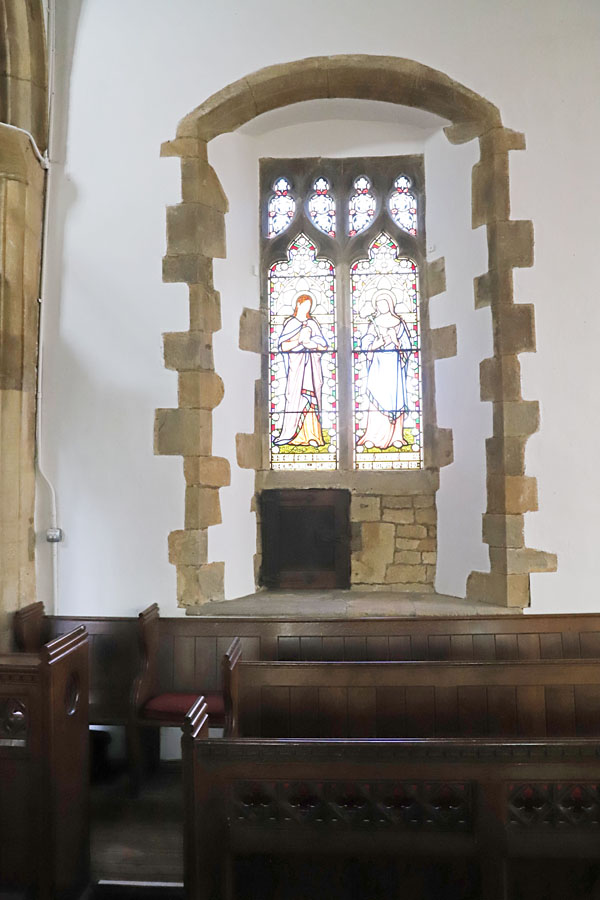
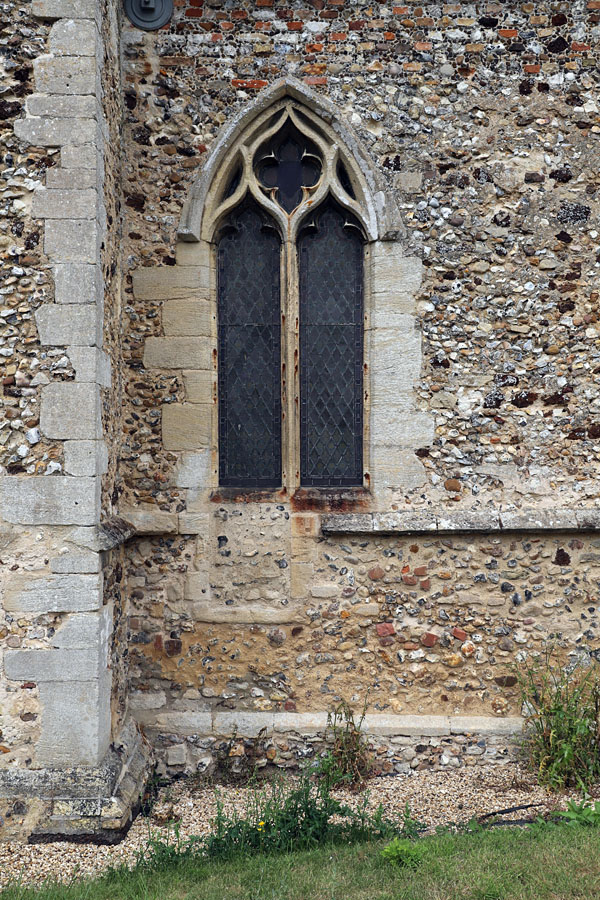
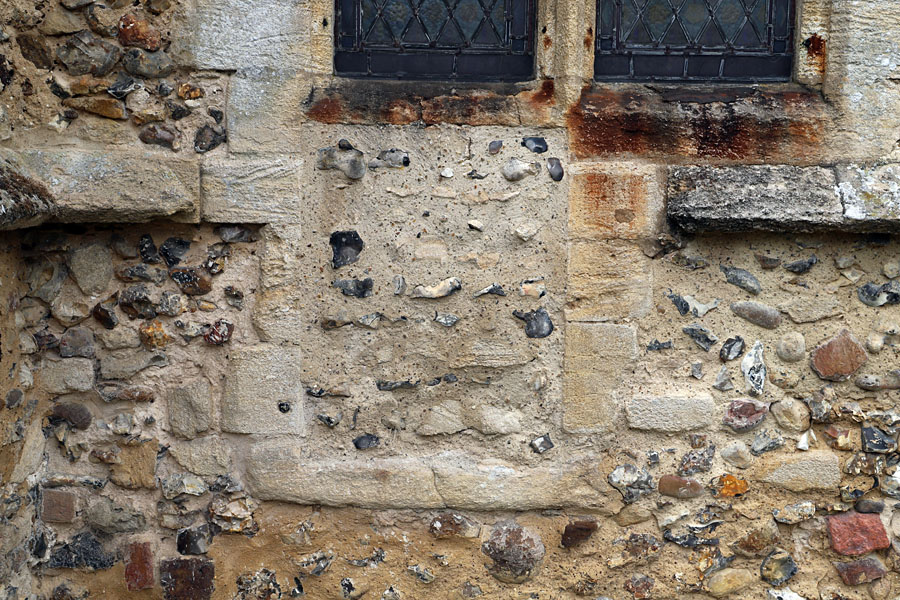
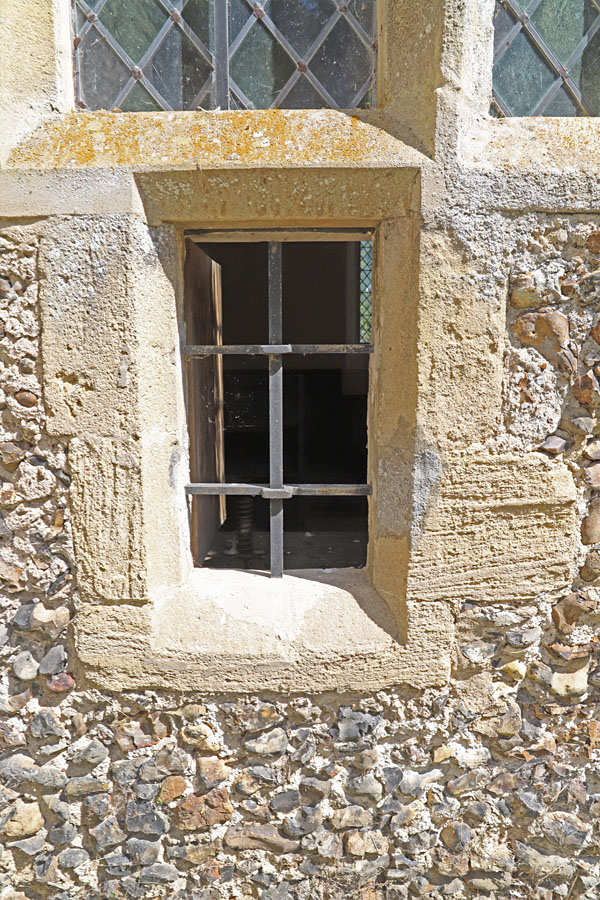
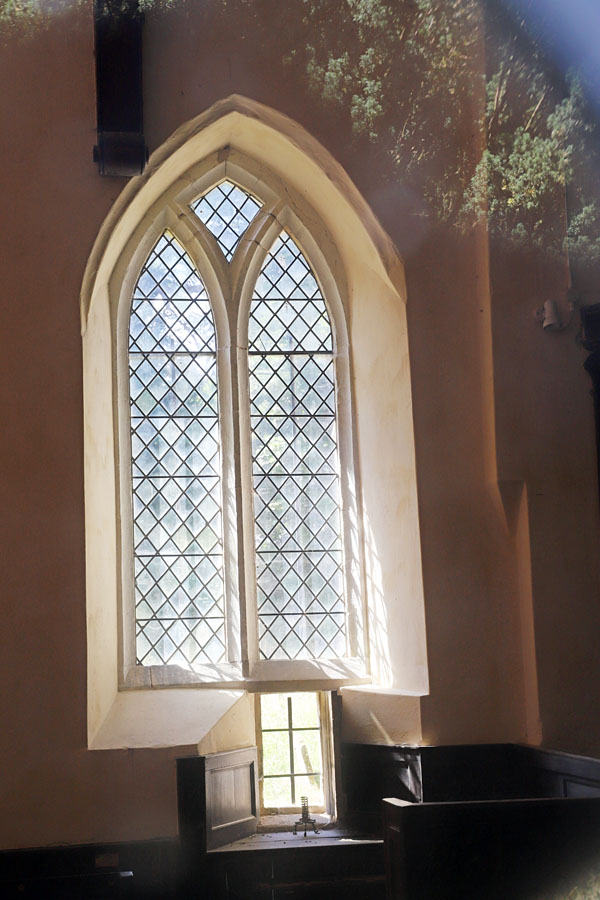
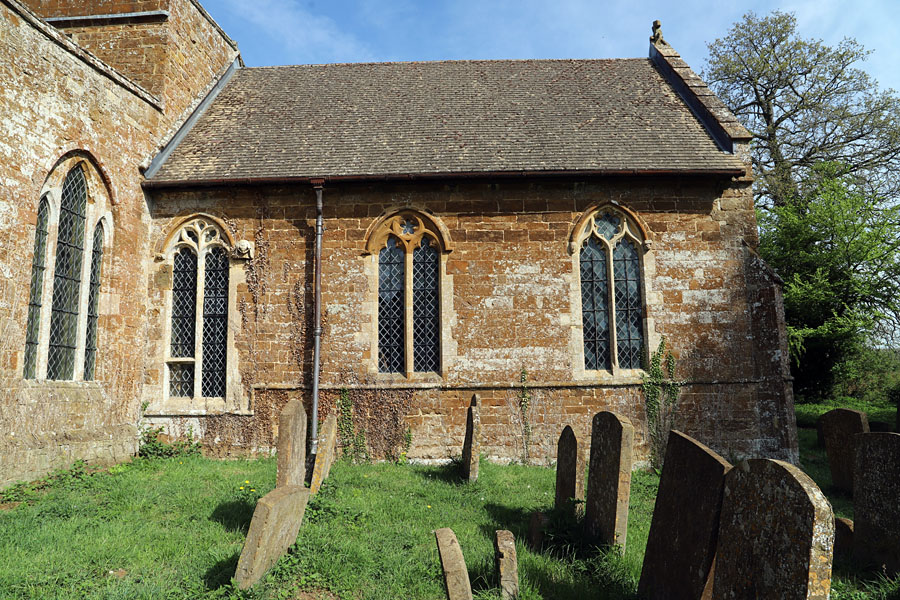
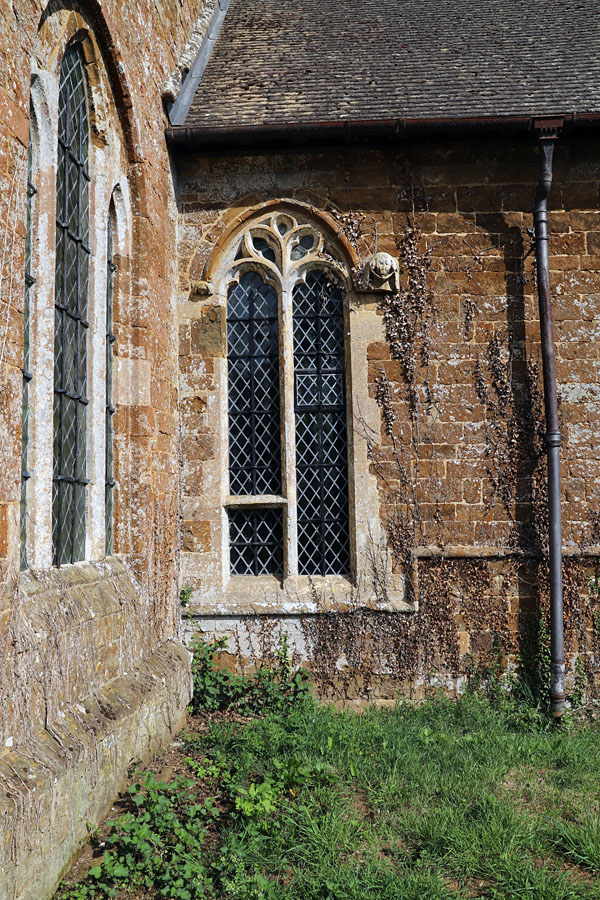
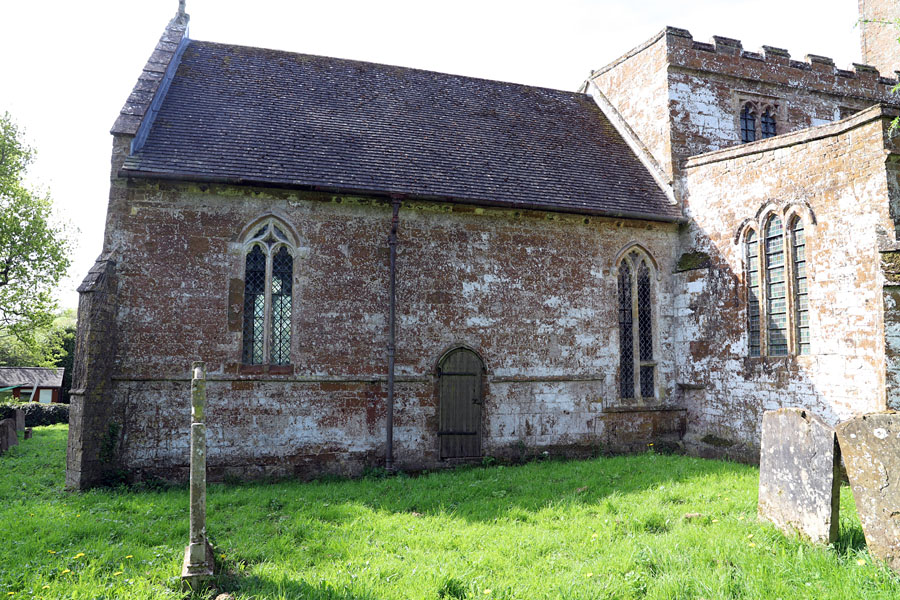
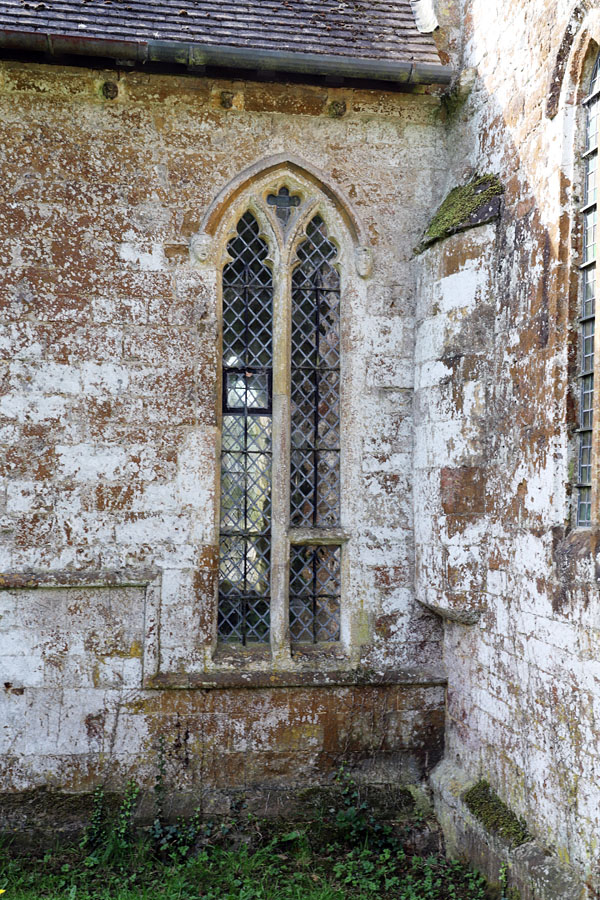
All the above examples clearly indicate the importance of the position of low side windows. In order to fulfil its liturgical function as a confessional, it needed to be as close to the western end of the chancel as possible. Examining other examples, it is also clear that some windows were deemed close enough to that location to be modified for confessional use. Others were clearly deemed too far from the western end of the chancel, or too high to be modified, and in these cases we see independent openings being installed.
Back to ContentsA New Classification for Low Side Windows.
With all this in mind, and ignoring specifics of their shape, size, complexity, or ornamentation, low side windows can be simply categorised as follows:
- Independent openings: No pre-existing chancel windows deemed close enough to its western end to be modified. In this case a new opening is formed at a suitable height to act as a confessional. For example: St Peter & St Paul, Courteenhall, Northamptonshire.
- Independent openings: A pre-existing chancel window deemed close enough to its western end, but too high to be used as a confessional. In this category a new opening is formed lower down. For example: St John the Baptist, Blisworth, Northamptonshire.
- Modified openings: A pre-existing chancel window deemed close enough to its western end, but too high to function as a confessional. These are modified by lowering the existing opening, either using the original sill to function as the new opening's lintel, for example; St Peter, Fakenham Magna, Suffolk, and All Saints, Ladbroke, Warwickshire, or adding a transom.
- Modified openings: A pre-existing window is both close enough and low enough to the western end of the chancel to be used for confessional purposes, and is modified by simply inserting a casement at its base.
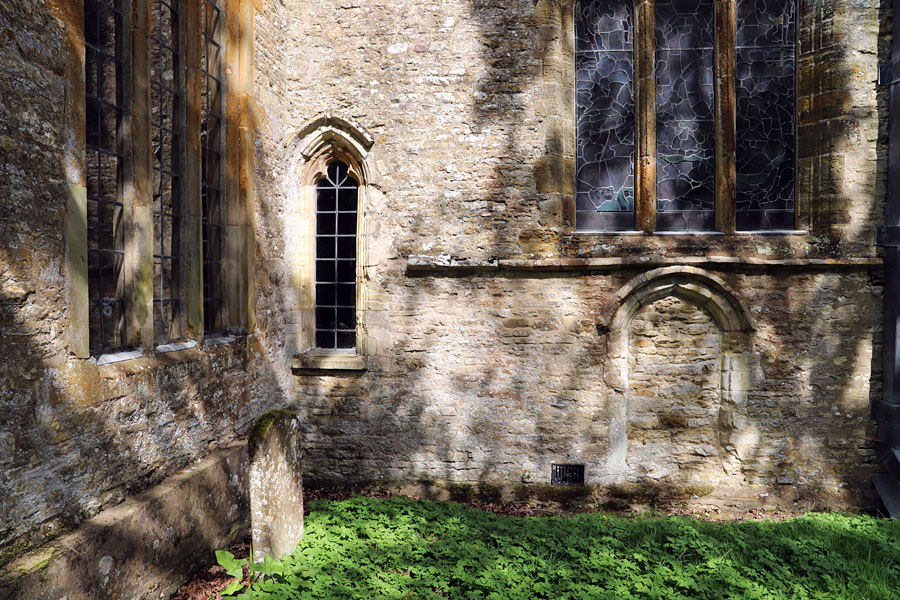
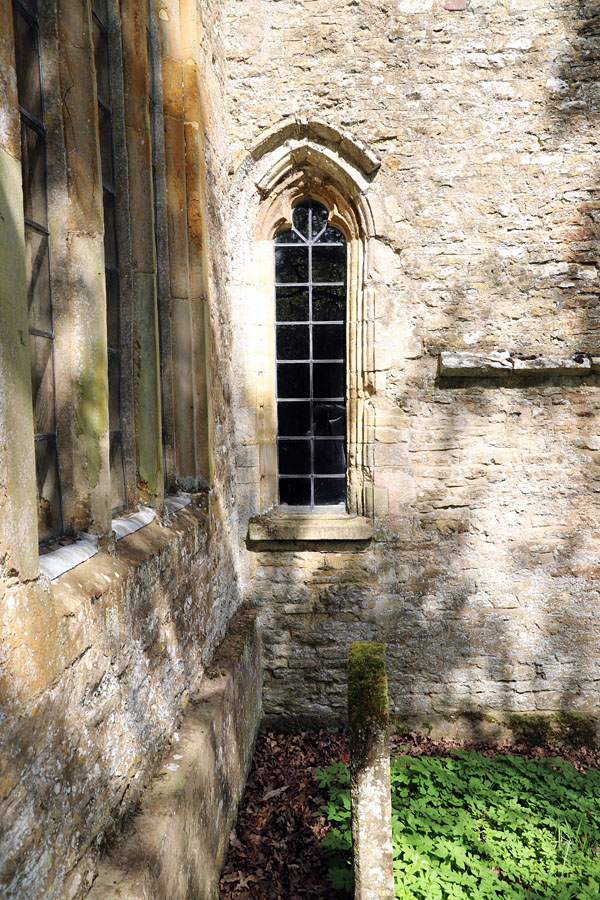
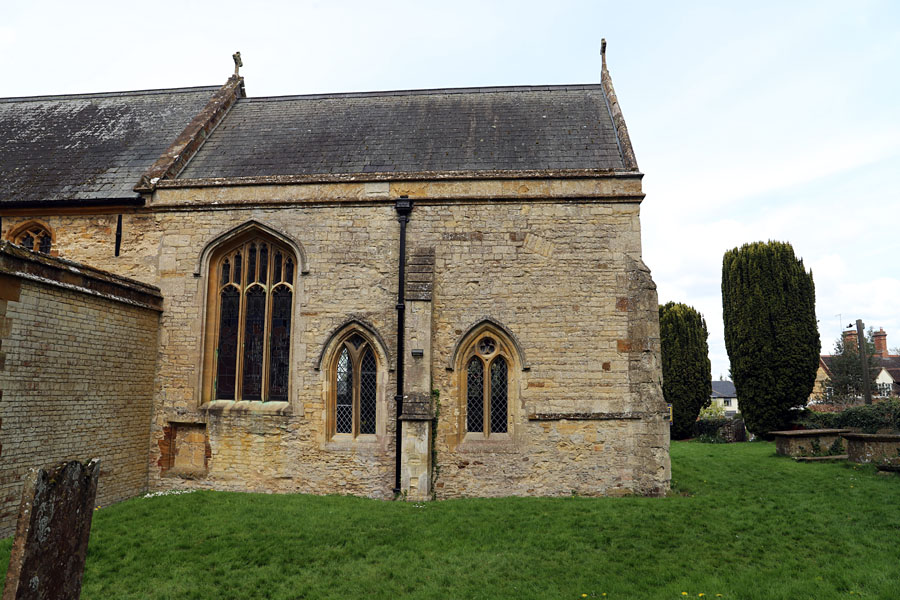
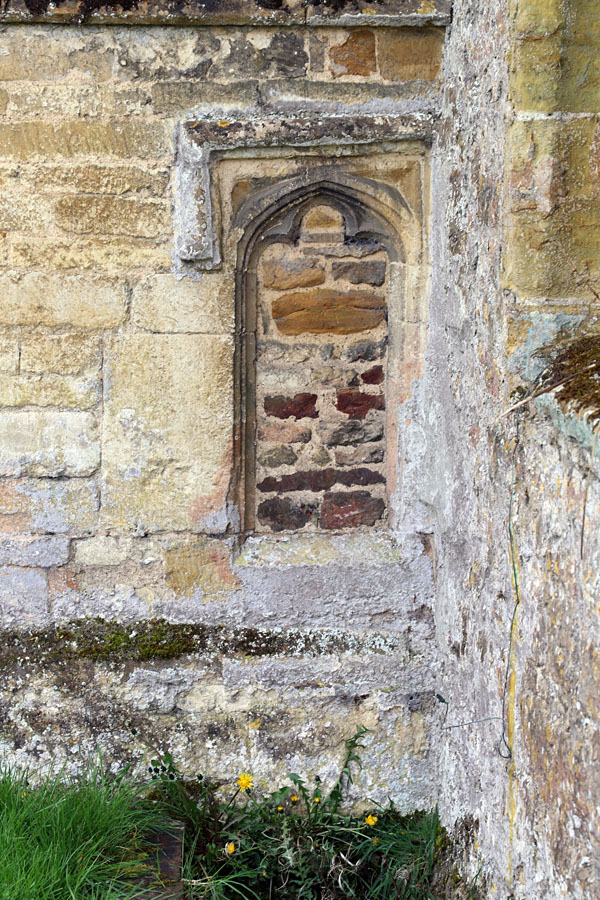
Quite how close a pre-existing window needs to be to the western end of the chancel to be deemed suitable to be modified for confessional purposes is moot. The same question may be asked, "How high is too high"? In some cases such as at
St James's, Hockwold cum Wilton, Norfolk
, it might be argued that the chancel windows were both too high and not close enough to its western end, therefore requiring an independent opening. There is also the questions of the economics and the magnitude of the structural changes that would be required. In a great many cases it may have been the haste required to furnish a church with a confessional window which dictated the final arrangement. Much more data will be required to assess whether there were any universal criteria, or whether it was left to the discretion of the incumbent, or patron.
Footnotes: Use your browser's Back button to return to text.
- There is an unusual exception to the norm at Horsham St Faith, Norfolk. Here the middle light of the three-light window at the west end of the chancel has been lowered to form a low side window, rather than the westernmost light. St Michael's Church, Great Cressingham, Norfolk, has four large Decorated windows on the south side of the chancel. Here the blocked low side window occurs beneath the 2nd window from the west end of the chancel, rather than the westernmost..
- Johnston, P. M. Low Side Windows in Sussex Churches: Sussex archaeological collections relating to the history and antiquities of the county. Vol XLI, 1898. p194.
- Ibid. p195. See also J. L. André; Medieval Confessionals in England; The Reliquary, January 1884, p129.
- Historic England Official List Entry for St Leonard's Sandridge. The entry suggests that the reclining figures are of donors. However, it is clear that the one on the south side is a monk or friar (Sandridge belonged to the Abbey at St Albans until the reformation). For further information about the chancel arch in St Leonards, see the entry on this site covering the Percy Bacon Glass.
- Houghton, F. T. S. The Low Side Windows of Warwickshire Churches - A paper read to the Birmingham Archaeological Society 21 March 1906.
- Confessional booths as we know them today which are generally placed in the nave of catholic churches did not appear until the 16th century.
- Kelly's Directory, 1888. Description of Sandridge Church.